
The Opening title montage of Ta’wy – Reconstructing Ancient Egyptian Culture
Tag: Ennead
-
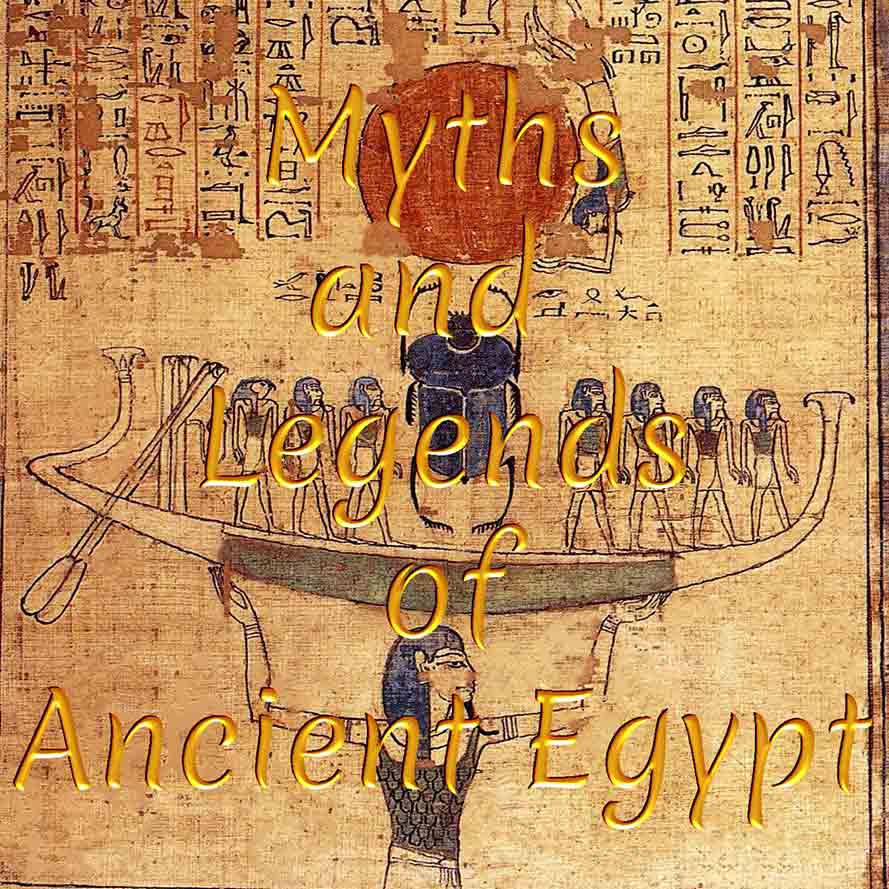
Myths and Legends of Ancient Egypt: The Book of Knowing the Creations of Ra
The Book of Knowing the Creations of Ra is an ancient Egyptian creation myth that narrates the self-creation of Ra, the sun god, and his role in forming the universe. Ra, also known as Khepra (the scarab beetle of creation), describes his emergence during the sp tpy (First Occasion), the moment of creation. He creates his children, Shu (the lower sky/atmosphere) and Tefnut (sky moisture), through self-insemination and spitting them out. Ra’s bA spirit manifests as Heka (magic), the creative force of the universe, which is invoked in rituals but not inherently present in humans.
Ra continues to create primeval beings from the nnw (primeval waters) and plans further creations using his Eye, representing the physical sun. His children form the Great Ennead (nine deities worshipped at Heliopolis), including Geb (earth), Nut (sky), Osiris, Horus, Seth, Isis, and Nephthys, who further populate the world.
The text transitions into the ritual destruction of App (Apophis), a primeval serpent embodying uncreation and chaos (isft), which threatens the cosmic balance (mAat). Seth defeats App nightly, who spears him to protect Ra’s sun boat during its journey through the dwAt (netherworld). App is imprisoned by Akr, a deity of the horizon, and consumed by the Glorious Eye of Ra, which destroys his bA (spirit), Dt (body), Swyt (shadow), and Heka.
The myth emphasizes the constant battle between creation and uncreation, the interconnected spirits (bA, kA, Dt), and the importance of maintaining cosmic balance (mAat). The text is part of the Bremner Rhind Papyrus, dated 312-311 BCE, and includes other rituals and hymns. It reflects the rich mythology and spiritual beliefs of ancient Egypt.
 /RSS Feed
 -
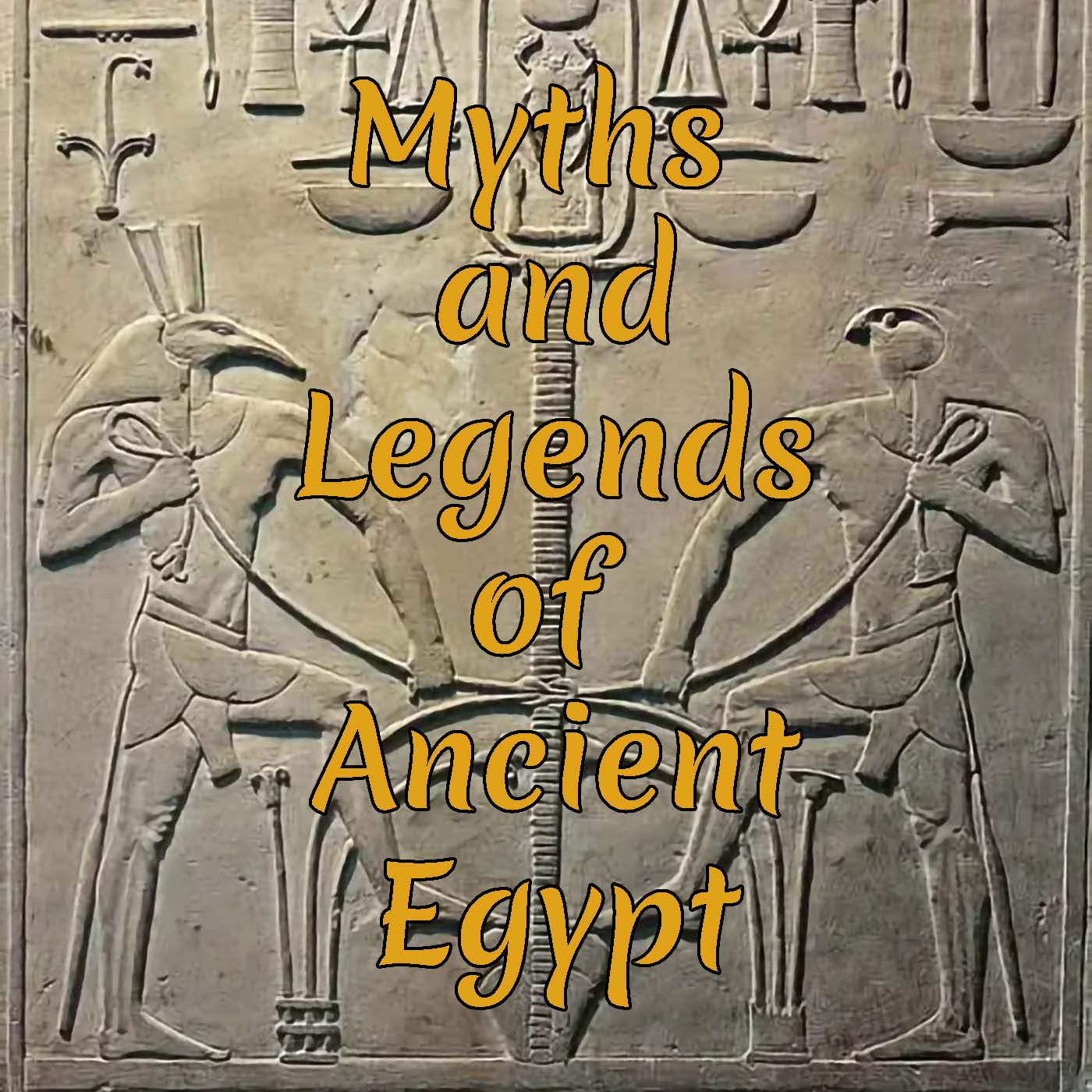
Myths and Legends of Ancient Egypt – Judgment of Horus and Seth
The Judgment of Horus and Seth, also known as the Contendings of Horus and Seth, is an ancient Egyptian myth that recounts the story of the gods’ struggle for the throne of Egypt following the death of Osiris. The conflict between Horus, Osiris’ son, and Seth, Osiris’ brother, lasted for decades and involved numerous trials and contests to determine who was the rightful ruler.
Key Events
- After Seth murdered Osiris, Horus claimed the throne as his birthright, but Seth argued that he was stronger and more capable of ruling.
- The gods of the Ennead, led by Ra, acted as judges in the dispute.
- Horus and Seth engaged in various competitions, including boat races, wrestling matches, and magical duels.
- At one point, Seth attempted to humiliate Horus by assaulting him, but Horus’ mother, Isis, intervened.
- The gods debated for years, with some supporting Seth and others favoring Horus.
- Eventually, Osiris himself intervened from the afterlife, demanding justice for his son.
- The gods finally ruled in favor of Horus, declaring him the rightful king of Egypt.
This myth was significant in Egyptian culture because it reinforced the idea of divine kingship, legitimizing the rule of pharaohs as descendants of Horus. It also symbolized the eternal struggle between order (Ma’at) and chaos, with Horus representing stability and Seth embodying disorder.
/RSS Feed -
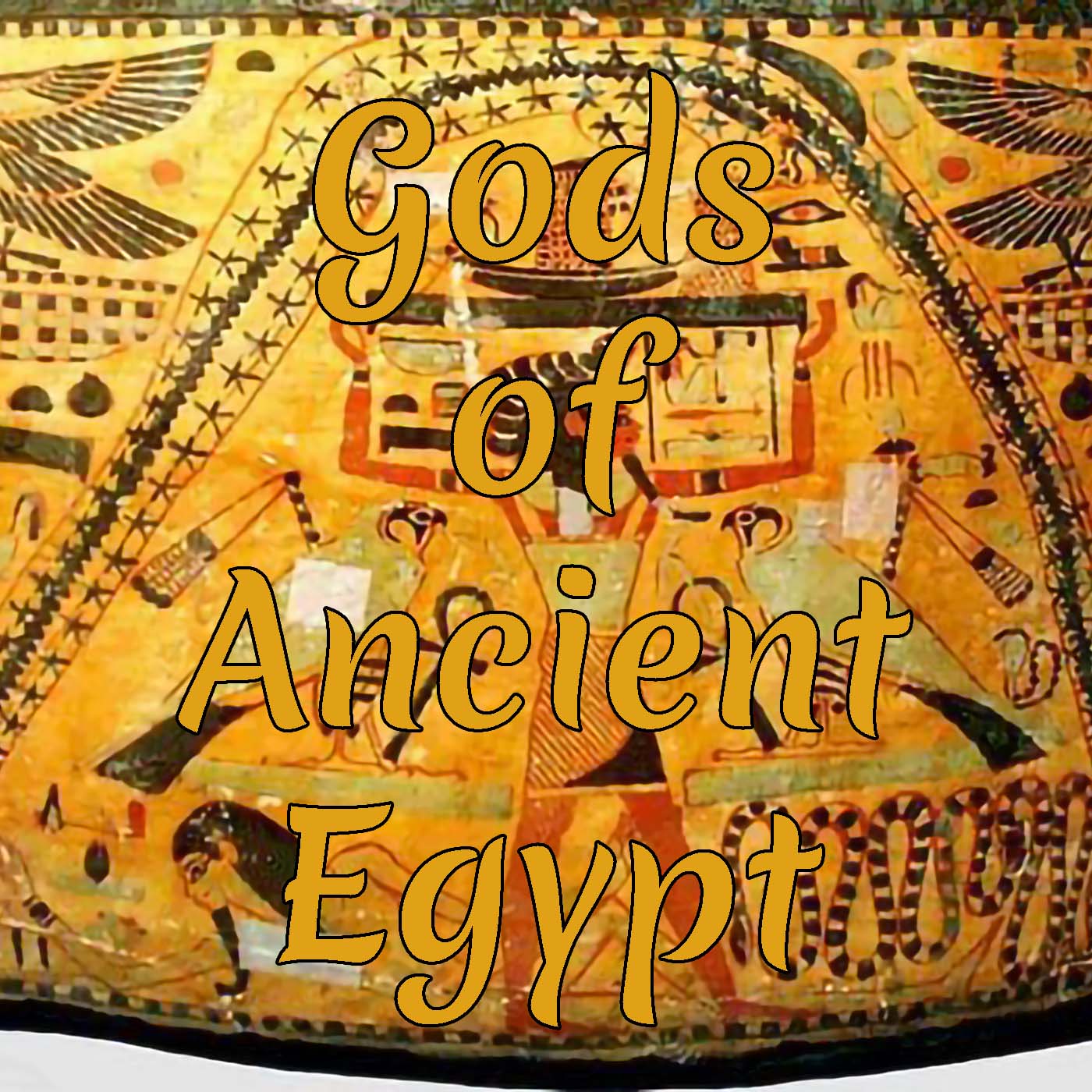
Gods of Ancient Egypt: Shu
Shu was a significant deity in ancient Egyptian mythology, revered as the god of air, light, and peace. He was one of the primordial gods and a member of the Ennead of Heliopolis, a group of nine deities central to Egyptian creation myths.
Origins and Role
Shu was created by itmw, the sun god, either by spitting or through self-generation. He was the twin brother and consort of tfnt, the goddess of moisture. Together, they gave birth to Geb (the earth god) and Nut (the sky goddess), making Shu the grandfather of Osiris, Isis, Set, and Nephthys.
Symbolism and Depictions
Shu was often depicted as a man wearing an ostrich feather, which symbolized lightness and emptiness. He was also shown holding up the sky, separating Nut from Geb to create space for life to exist. This act was crucial in Egyptian cosmology, as it established the duality of above and below, light and dark, order and chaos.
Associations and Myths
- Shu was associated with wind, air, and fog, which were sometimes referred to as his “bones.”
- He was seen as a calming force, representing balance and truth (Ma’at).
- In later myths, Shu was linked to Atlas, the Greek Titan who held up the heavens.
Shu played a vital role in maintaining cosmic order, ensuring that the sky remained separate from the earth. His presence was believed to bring peace and stability, making him a revered figure in Egyptian religion.
/RSS Feed -

Gods of Ancient Egypt – Ra
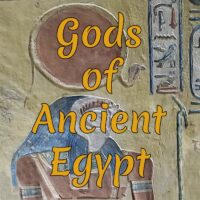
The document provides an extensive overview of Ra, the ancient Egyptian sun god, highlighting his significance, mythology, and worship. Ra is described as a transcendent deity often syncretized with other gods, such as Atum, Khnum, Amun, and Horus, representing different aspects of creation and the sun’s cycle (morning, midday, and evening). His mythos includes his role as the creator, his struggles against adversaries like Apep in the underworld, and his interactions with other gods, such as Isis, who gained his secret name to save him from venom. Ra’s worship dates back to the Second Dynasty and peaked during the Old Kingdom, where rulers were considered “Sons of Ra” and temples with obelisks symbolized his power.
Ra’s myths include the Bennu bird, akin to the phoenix, symbolizing creation and renewal. He is depicted as a falcon-headed man with a sun disc and cobra headdress, traveling in his night boat through the underworld. His eye, represented by Hathor and Sekhmet, is a powerful force used to punish humanity. Ra’s daily journey across the sky and his role in creation are celebrated in hymns, emphasizing his perfection, radiance, and eternal labor.
 /RSS Feed
