In the introduction to the ancient Egyptian calendar, you discover the several calendars used by the ancient Egyptians and the celestial or seasonal events that synchronize them. Topics covered include the lunar, solar, cosmic, and regnal calendars, as well as the so-called horoscope calendar of lucky and unlucky days. It provides an in-depth overview of the Egyptian religious and civil calendars, their structure, significance, and associated festivities. The episode explores the Sothic Cycle, an ancient Egyptian astronomical system used to track time based on the heliacal rising of the star Sirius (Sothis).
The episode explores the connection between the Egyptian calendar and astronomical phenomena, particularly the heliacal rising of Sirius. It discusses the Egyptian year, which consisted of 365 days and receded one day every four years compared to the Julian year, forming a cycle of 1461 years known as the Sothic cycle. The author examines historical records, inscriptions, and calculations to analyze the alignment of the Egyptian calendar with the rising of Sirius and the implications for dating events.
The ancient Egyptian calendar evolved from natural observations to a fixed system, reflecting both practical needs and cultural traditions. Its endurance highlights the interplay between astronomy, agriculture, and societal organization in ancient Egypt.
Ta’wy Podcast Channel
Beginning of Time ~ End of Eternity – Calendar of Ancient Egypt: Introduction to the Ancient Egyptian Calendar
The Palermo Stone named after the city in Italy where it is currently in residence, this artifact is a fragment of a larger stele named by Egyptologists as the Royal Annals of the Old Kingdom of Ancient Egypt. The aforementioned stele contains a list of the rulers of the united Two Lands of ancient Egypt from the first dynasty to the mid fifth dynasty, along with some of the significant events of their reigns. The stele also contains the names of rulers of the pre-unification era, and going back to legendary and mythical rulers. The record even includes the rulers of the mythical time when the deities were in the seen world and ruled the land, going back to the Memphite creator deity PtaH, and successor Rع. This gives a particular clue as to the possible syncretism and geographical origin of the stele.
Palermo stone verso side (Image: Hsu, 2010)
Currently the origins of the Palermo fragment are unknown, along with the others of the seven found fragments of the original stele. Theories about the stele all remain in controversy. Its age, location and even whether they are all part of the same stele are under debate. One theory is that given its record ends in the fifth dynasty it is indeed from the Old Kingdom. Another is it may be a copy of the original Old Kingdom work from the twenty fifth dynasty. However the theological record of the mythical era should be taken into account. The pharaohs of the Old Kingdom were centric to the theology of Heliopolis, where Ra the Sun was the force of creation. The Memphite Theology however puts the mummified human deity of Ptah at the head of creation, and Ra coming forth as his creation. This syncretism of theologies started to occur around the first dynasty, when the rulers established the Nome of Inabw Hadj (Walls of White), the fortress of Menes, as Men Nefer (endures beautifully), the capitol of the naswt bitya (of Sedge and Bee) ruler of the Two Lands. This fact also makes for more argument as then it could have had its beginnings in the first dynasty and the stela added to as time went on. Analyses of the hieroglyphs indicate it is not in the original Old Kingdom or even soon after.
Description and Content
Palermo stone fitted with other fragments of the Royal Annals of Old Kingdom Egypt (Image: Lundström, 2010)
The Palermo fragment is approximately 43.5 cm high, 25 cm wide and 6.5 cm thick. The recto inscription consists of 6 horizontal registers of Old Kingdom hieroglyphics. The first register lists the names of predynastic bityw (rulers) of maHan (Lower Egypt), which is indicated by the seated man hieroglyph wearing the dashrat (Red Crown). The second register inscribes the final year a First Dynasty naswt bitya, whom is generally assumed to be either Narmer or Aha. The rest of the register contains the first nine annual entries for his successor, again not named on the fragment, but assumed to be either Aha or Djer. The recto inscription continues with royal annals onto the naswt bitya of the Fourth Dynasty.
The registers continue on the verso, inscribing events during the reigns of rulers down to Neferirkare Kakai, the third ruler of the Fifth Dynasty. It is not known whether the Royal Annals originally continued beyond this point in time. If the ruler is named, the name of his mother is also included. Content includes measurements of the height of the annual inundation of the Nile, details of Sed and other festivals, grain tax collected, monuments, architecture, and warfare.
Click to Return to the Royal Annals of Ancient Egypt
References
Hsu, S.-W. (2010). The Palermo Stone: the Earliest Royal Inscription from Ancient Egypt. Altoriental. Forsch., 37(1), 68–89. http://www.ancientportsantiques.com/wp-content/uploads/Documents/PLACES/Egypt-Libya/PalermoStone-Hsu2010.pdf
Lundström, P. (2010). The Royal Annals of Egypt. File:The Royal Annals of Egypt.png. Wikipedia. https://commons.wikimedia.org/wiki/File:The_Royal_Annals_of_Egypt.png.
Lundström, P. (2017, October 3). Other king lists of Ancient Egypt. Pharaoh.se. https://pharaoh.se/other-king-lists.
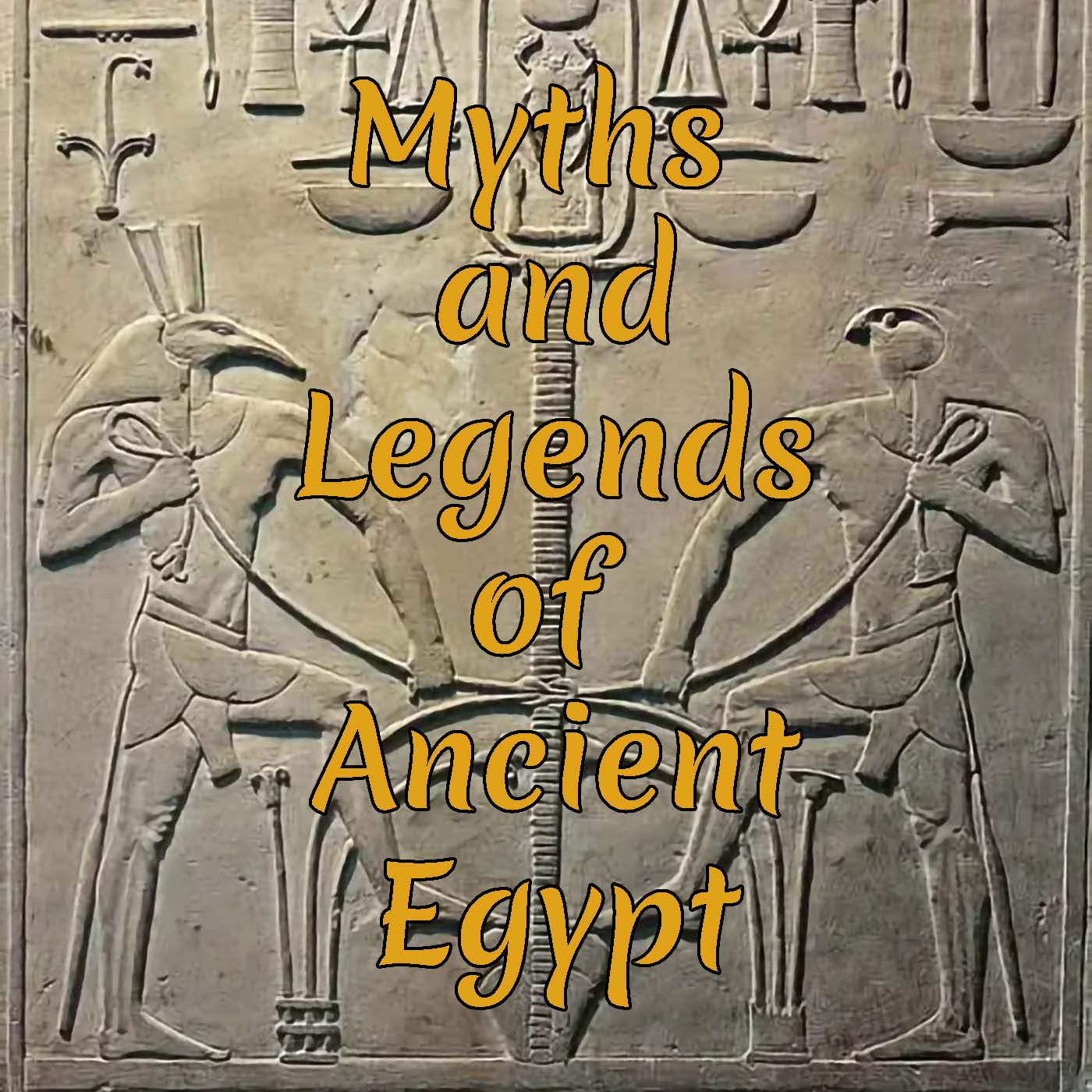
The Judgment of Horus and Seth, also known as the Contendings of Horus and Seth, is an ancient Egyptian myth that recounts the story of the gods’ struggle for the throne of Egypt following the death of Osiris. The conflict between Horus, Osiris’ son, and Seth, Osiris’ brother, lasted for decades and involved numerous trials and contests to determine who was the rightful ruler.
Key Events
After Seth murdered Osiris, Horus claimed the throne as his birthright, but Seth argued that he was stronger and more capable of ruling.
The gods of the Ennead, led by Ra, acted as judges in the dispute.
Horus and Seth engaged in various competitions, including boat races, wrestling matches, and magical duels.
At one point, Seth attempted to humiliate Horus by assaulting him, but Horus’ mother, Isis, intervened.
The gods debated for years, with some supporting Seth and others favoring Horus.
Eventually, Osiris himself intervened from the afterlife, demanding justice for his son.
The gods finally ruled in favor of Horus, declaring him the rightful king of Egypt.
This myth was significant in Egyptian culture because it reinforced the idea of divine kingship, legitimizing the rule of pharaohs as descendants of Horus. It also symbolized the eternal struggle between order (Ma’at) and chaos, with Horus representing stability and Seth embodying disorder.
Ta’wy Podcast Channel
Myths and Legends of Ancient Egypt – Judgment of Horus and Seth
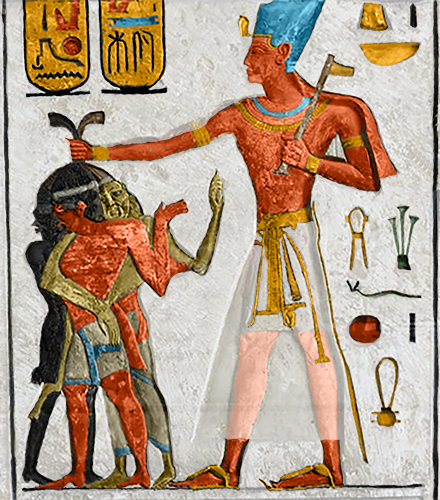
Ramesses II, also known as Ramesses the Great, was one of ancient Egypt’s most powerful and celebrated pharaohs. He ruled during the 19th Dynasty from 1279 to 1213 BCE. His reign lasted 66 years, making it one of the longest in Egyptian history.
Key Achievements
Military Campaigns: He led numerous military expeditions, including the famous Battle of Kadesh against the Hittites, which resulted in the world’s first known peace treaty.
Monumental Construction: Ramesses II was a prolific builder, commissioning grand temples such as Abu Simbel, the Ramesseum, and additions to Karnak.
Political Influence: He expanded Egypt’s influence across the region, securing trade routes and fortifying borders.
Personal Life: He had over 200 wives and concubines, fathered 96 sons and 60 daughters, and lived to be around 90 years old.
Ramesses II’s legacy endures through his monumental architecture and inscriptions, which can be found throughout Egypt. His mummy is now displayed at the National Museum of Egyptian Civilization in Cairo. He was so revered that later Egyptians referred to him as the “Great Ancestor”.
The document provides an extensive overview of Ra, the ancient Egyptian sun god, highlighting his significance, mythology, and worship. Ra is described as a transcendent deity often syncretized with other gods, such as Atum, Khnum, Amun, and Horus, representing different aspects of creation and the sun’s cycle (morning, midday, and evening). His mythos includes his role as the creator, his struggles against adversaries like Apep in the underworld, and his interactions with other gods, such as Isis, who gained his secret name to save him from venom. Ra’s worship dates back to the Second Dynasty and peaked during the Old Kingdom, where rulers were considered “Sons of Ra” and temples with obelisks symbolized his power.
Ra’s myths include the Bennu bird, akin to the phoenix, symbolizing creation and renewal. He is depicted as a falcon-headed man with a sun disc and cobra headdress, traveling in his night boat through the underworld. His eye, represented by Hathor and Sekhmet, is a powerful force used to punish humanity. Ra’s daily journey across the sky and his role in creation are celebrated in hymns, emphasizing his perfection, radiance, and eternal labor.
A dramatic retelling of the fourth story of the Westcar Papyrus is told by Hardedef, son of Khufu, and takes place during Khufu’s reign. Hardedef tells his father about a magician named Dedi, who possesses incredible abilities—he can reattach a severed head onto an animal and tame a wild lion. He also claims that Dedi has knowledge about the Temple of Thoth.
Intrigued, Khufu orders Hardedef to bring Dedi to his court. When asked to demonstrate his magic, Dedi refuses to perform on a human but agrees to sever and reattach the heads of a goose, a waterfowl, and an ox. Khufu then asks Dedi about the Temple of Thoth, hoping to learn its secrets, but Dedi reveals that while he does not know the number of rooms in the temple, he knows its location. However, he refuses to share further details, stating that the one destined to access the temple is the firstborn of three future pharaohs—Userkaf, the first king of the Fifth Dynasty, who will be born to Reddjedet, the wife of a priest of Ra.
This story serves as a prophecy establishing the legitimacy of Userkaf, Sahure, and Neferirkara Kakai, contrasting their pious rule with Khufu’s reputation for impiety. Some scholars interpret the tale as a morality story, suggesting that Khufu’s pursuit of forbidden knowledge contributed to the downfall of his dynasty.
Ta’wy Podcast Channel
Ancient Egyptian Literature – Pharaoh Khufu and the Tales of the Haka’ayu-Magicians
The episode is about Thutmose III, Pharaoh of Ancient Egypt, focusing on his life, military achievements, and legacy. Key Points:
Introduction: The speech begins with an Ancient Egyptian greeting and introduces Thutmose III, emphasizing his significance as a military strategist who restored Egypt’s empire after a period of weakness under his predecessors.
Early Life and Co-Regency with Hatshepsut: Thutmose III’s father died when he was young, leading to his half-sister Hatshepsut becoming regent. She later crowned herself Pharaoh, sidelining Thutmose. While Hatshepsut focused on building projects and propaganda, Thutmose prepared himself as a military commander.
Military Campaigns: After Hatshepsut’s death, Thutmose III emerged as a warrior Pharaoh, leading campaigns to expand Egypt’s borders. His most notable victory was the conquest of Megiddo, achieved through brilliant strategy and military prowess.
Triumphant Return and Legacy: Thutmose III celebrated his victories by commissioning monuments and securing his empire through annual marches, hostage diplomacy, and appointing his son Amenhotep II as co-regent. He also erased Hatshepsut’s legacy to ensure his progeny’s succession.
Conclusion: The speech highlights Thutmose III’s role in protecting and expanding Egypt, enabling the construction of its iconic monuments.
Sources: The episode references multiple historical texts, including works by Elizabeth Ann Payne, Robert B. Partridge, Mark Healy, and others, to support its claims.