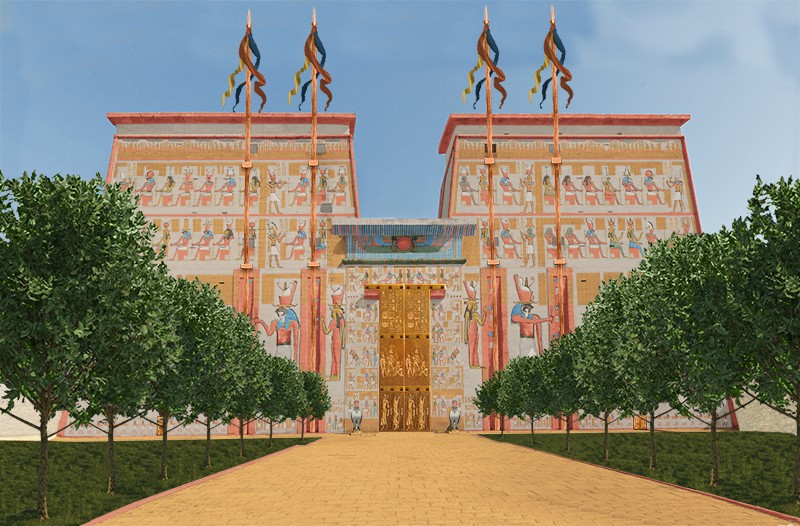
Our festival reenactments for the hrw Hryw rnpt and wpt rnpt begin July 14 at approximately 8 AM PDT on YouTube Live. Subscribe to our channel and click the notification bell to be alerted when we are live. Follow our social media for official schedules.
Author: Patrick A. McCoy, M. A.
-
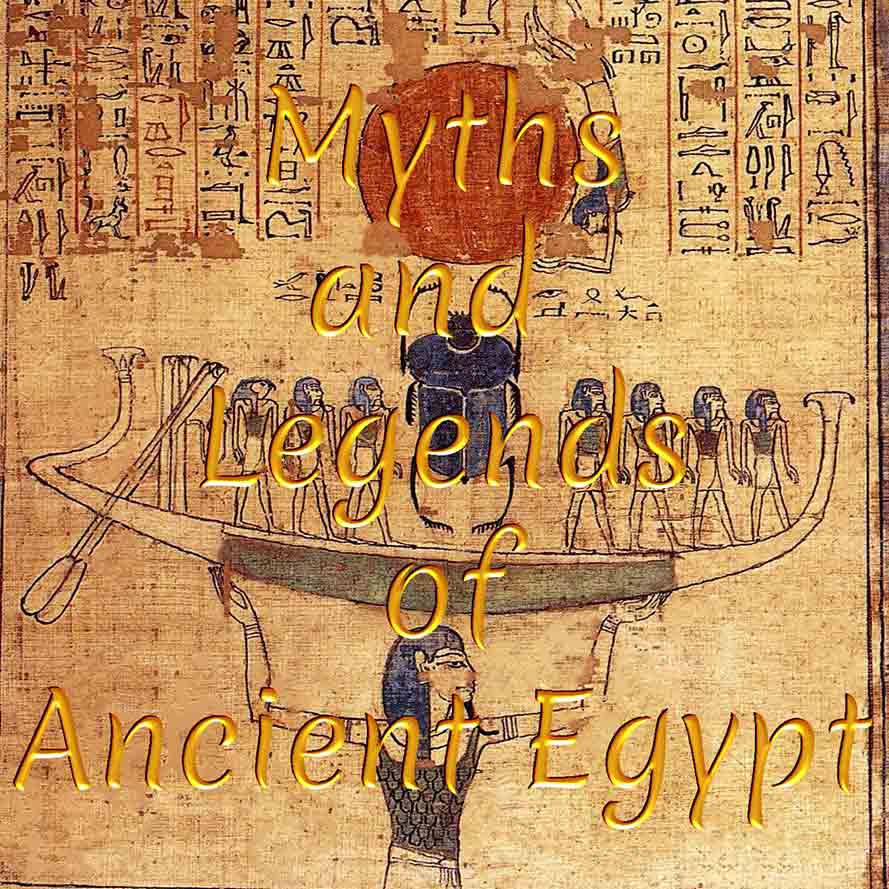
Myths and Legends of Ancient Egypt: The Book of Knowing the Creations of Ra
The Book of Knowing the Creations of Ra is an ancient Egyptian creation myth that narrates the self-creation of Ra, the sun god, and his role in forming the universe. Ra, also known as Khepra (the scarab beetle of creation), describes his emergence during the sp tpy (First Occasion), the moment of creation. He creates his children, Shu (the lower sky/atmosphere) and Tefnut (sky moisture), through self-insemination and spitting them out. Ra’s bA spirit manifests as Heka (magic), the creative force of the universe, which is invoked in rituals but not inherently present in humans.
Ra continues to create primeval beings from the nnw (primeval waters) and plans further creations using his Eye, representing the physical sun. His children form the Great Ennead (nine deities worshipped at Heliopolis), including Geb (earth), Nut (sky), Osiris, Horus, Seth, Isis, and Nephthys, who further populate the world.
The text transitions into the ritual destruction of App (Apophis), a primeval serpent embodying uncreation and chaos (isft), which threatens the cosmic balance (mAat). Seth defeats App nightly, who spears him to protect Ra’s sun boat during its journey through the dwAt (netherworld). App is imprisoned by Akr, a deity of the horizon, and consumed by the Glorious Eye of Ra, which destroys his bA (spirit), Dt (body), Swyt (shadow), and Heka.
The myth emphasizes the constant battle between creation and uncreation, the interconnected spirits (bA, kA, Dt), and the importance of maintaining cosmic balance (mAat). The text is part of the Bremner Rhind Papyrus, dated 312-311 BCE, and includes other rituals and hymns. It reflects the rich mythology and spiritual beliefs of ancient Egypt.
 /RSS Feed
 -
Par Madja’at Ancient Egyptian House of Books Episode 5
The episode provides a detailed overview of Episode 5 of “Par Madja’at House of Ancient Egyptian Books,” which focuses on research and literature about ancient Egypt. Key highlights include:
- Book Summary and Review:
- The Priests of Ancient Egypt by Serge Sauneron is reviewed. The book explores the role of the priesthood in ancient Egypt, their rituals, temple functions, and sacred knowledge. It emphasizes the concept of Ma’at (universal balance) and the duties of priests as substitutes for the pharaoh in maintaining divine order. The book is structured into chapters discussing priestly functions, temple hierarchies, sacred services, intellectual mastery, and the changing fortunes of Egyptian clergy. It also delves into the cultural and spiritual significance of temples and rituals.
- The book is praised for its subsection format, which organizes vast information effectively.
- Magazines and Periodicals:
- The February 2008 issue of National Geographic features Robert Draper’s “The Black Pharaohs: Conquerors of Ancient Egypt.” The Article discusses the Kushite rulers who united Egypt during the late period (730 BCE), their cultural assimilation, temple restoration, and pyramid building. Draper highlights the irrelevance of race in ancient Egypt and critiques modern racial debates in Egyptology.
- Research on the Web:
- Articles explore ancient Egyptian bread-making techniques, the geography of durum wheat, and efforts to recreate bread using 4,500-year-old Egyptian yeast.
- Electronic Documents:
- Topics include the epagomenal days marking the birth of key deities, ancient Egyptian baking and brewing methods, scribal training for civil service, and comparisons between Egyptian and Mesopotamian bread molds.
The episode provides a rich exploration of ancient Egyptian culture, focusing on priesthood, rituals, and food preparation, supported by books, articles, and research.
/RSS Feed - Book Summary and Review:
-
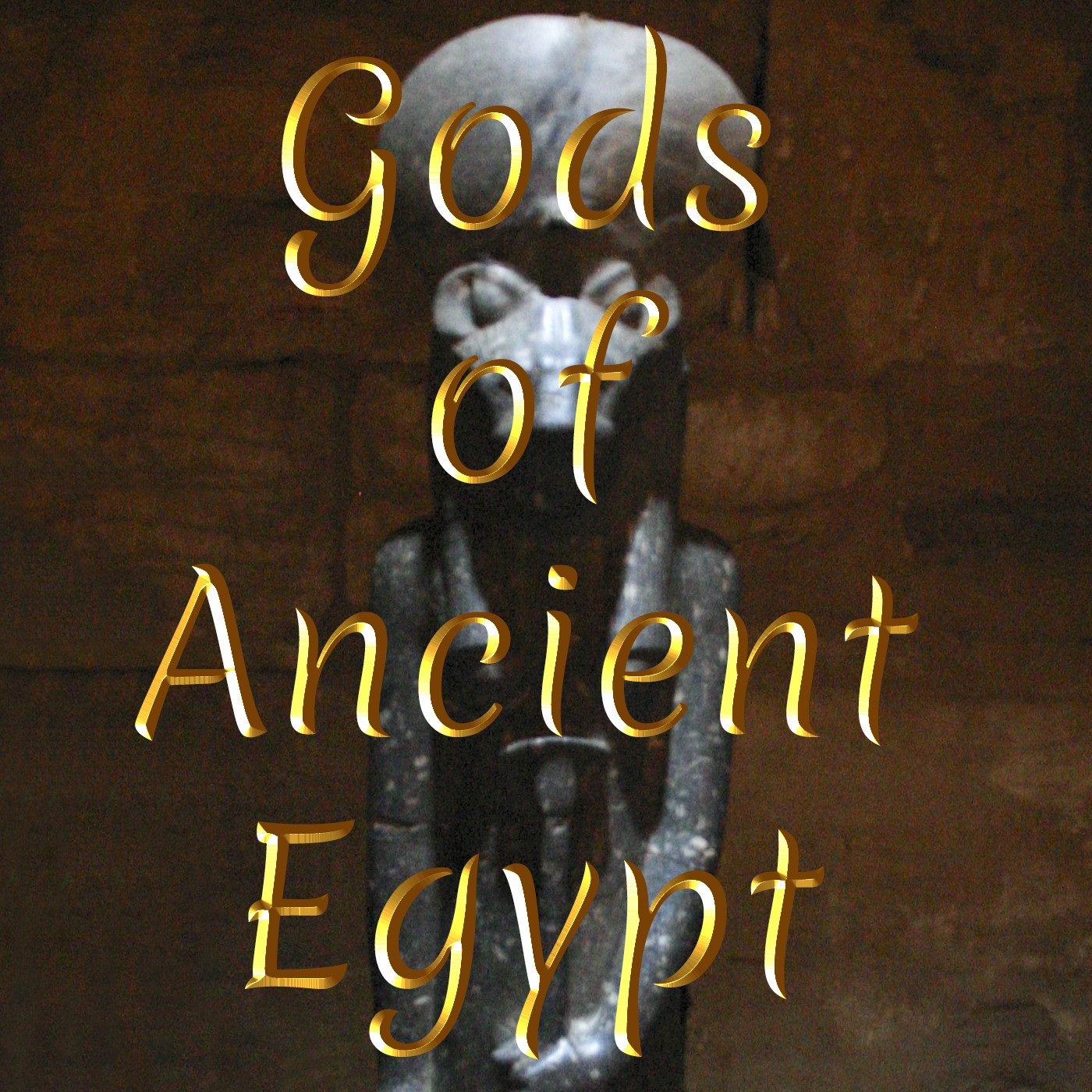
Gods of Ancient Egypt: Sakhamat – Sekhmet
The episode provides an extensive overview of Sakhamat (Sekhmet), an ancient Egyptian goddess associated with power, war, destruction, healing, and protection. Below is a summary:
Origins and Mythology: Sakhamat, derived from “sxm” (power) and “t” (female), is a lioness-headed goddess linked to war, destruction, and healing. She is central to the myth of the “Destruction of Mankind,” where she punished humanity at Ra’s command but was pacified by drinking red-dyed beer, mistaking it for blood. This event is commemorated in the festival of drunkenness.
Appearance: Sakhamat is depicted as a lioness or a gold-skinned woman with a lioness head, sun disk headdress, and cobra uraeus. Her attire includes a broad collar and a sheer sheath dress, symbolizing youth and fertility.
Roles and Associations:
War and Protection: Patroness of pharaohs, she embodies duality as a war goddess and protector. Her destructive powers are bound by righteousness (Ma’at).
Healing and Medicine: Sakhamat controls disease demons (xAtyw) and patronizes physicians. Priests trained in her temples served as healers.
Tree Cults: She is linked to sacred groves and tree cults, alongside other goddesses like Hathor, Bastet, and Isis. Worship Centers:
Memphis: Sakhamat was worshipped alongside Ptah and their son Nefertem. She absorbed the local goddess of Memphis.
Karnak: Hundreds of her statues were erected during Amenhotep III’s reign, and she was syncretized with Mut.
Other Sites: Temples and cults dedicated to Sakhamat existed in Kom el-Hisn, Abusir, and other locations. Rituals and Festivals: Sakhamat was honored in rituals to protect against her “Seven Arrows” of pestilence, with amulets and menat necklaces used to appease her. The festival of drunkenness celebrated her pacification.
Historical Influence: Sakhamat’s cult persisted through various dynasties, including the Old Kingdom, New Kingdom, and Ptolemaic era, often protecting mortuary temples from dismantlement.
Sakhamat embodies a complex duality as a goddess of destruction and healing, deeply integrated into Egyptian mythology, religion, and royal patronage.
/RSS Feed -
Par Madja’at Ancient Egyptian House of Books – Episode 4
The document provides a detailed summary of Episode 4 of Par Madjat House of Books, which includes a review of Food Fit for Pharaohs: An Ancient Egyptian Cookbook by Michelle Berriedale-Johnson, highlights from the May/June 2020 issue of Archaeology magazine, and insights into ancient Egyptian research and electronic documents.
Key Highlights:
Book Review: Food Fit for Pharaohs The cookbook explores ancient Egyptian cuisine, using modern Middle Eastern recipes inspired by Egyptological studies and tomb paintings.
Ancient staples like bread (made from millet, barley, and wheat), fava beans, chickpeas, and lentils are discussed, though many recipes are modern adaptations.
Recipes include molokhia, fuul nabeb, hummus, baba ganouj, and ful medames, with varying degrees of authenticity to ancient Egyptian cuisine.
Desserts and breads, such as semolina cake and aish baladi, are also featured, though some ingredients and methods are anachronistic.
The book is recommended for its introduction to Middle Eastern cuisine, but due to its limited historical accuracy, it should be purchased used or borrowed. Magazines and Periodicals
Archaeology magazine features discoveries like a leopard painting from the Ptolemaic era, a genome study of ibis mummies, and ceremonial weapons like maces.
Articles include site preservation efforts at Deir el-Ballas, Egyptomania, Napoleon’s expedition to Egypt, and debates on the identity of KV55’s occupant.
Other topics include the Animal Mummy Project, the city of Hierakonpolis, and Saqqara’s burial history. Research on the Web
The Egyptian Ministry of Tourism and Antiquities shared the oldest written lentil recipe from the 3rd century AD.
Discoveries at Saqqara include a burial chamber connected to a mummification workshop, revealing unique burial practices.
Ancient Egyptian medicine emphasized spiritual health, preventive care, and hygiene, with diets rich in onions, garlic, and antioxidants. Electronic Documents
Grasses of Ancient Egypt explores the use of grasses for food, medicine, and materials since the Predynastic era.
A Pint of the Past discusses modern recreations of ancient Egyptian beers, such as Hanaqat and Ta Henket, based on archaeological evidence.
The Eloquent Peasant translations provide insights into Middle Kingdom literature and justice.Overall, Episode 4 offers a blend of culinary exploration, archaeological discoveries, and historical research, providing readers with a rich understanding of ancient Egyptian culture and its modern interpretations.
/RSS Feed -
Divine Offerings: Ancient Egyptian Cuisine: Ancient Egyptian Wheat
Discusses the ancient Egyptian wheat – Badat – and the equivalent species of Emmer, Einkorn, Durum, Khorasan (Kamut) and Polish Wheat that are available today.
-

Ancient Egyptian Literature – The Tale of the Eloquent Peasant
The story revolves around a peasant named xw.n-inpw from the Wadi Natrun region who sets out to Egypt to fetch provisions for his family. On his journey, he encounters nmti-nxt, a servant of the Chief Magistrate, rn-si, son of mrw, who deceitfully blocks his path and seizes his donkeys after accusing them of eating his barley. Despite xw.n-inpw‘s protests and offers to compensate for the barley, nmti-nxt beats him and takes his goods.
Xw.n-inpw pleads his case to the Chief Magistrate rn-si, son of mrw, repeatedly over nine petitions, eloquently appealing for justice and condemning corruption. Under orders from Pharaoh nb-kAw-ra, the Chief Magistrate delays responding to the peasant’s pleas to document his eloquent speeches. Meanwhile, provisions are secretly provided to xw.n-inpw and his family.
Eventually, the Chief Magistrate presents the peasants’ petitions to Pharaoh, who is impressed by the peasants’ eloquence. The Pharaoh orders justice to be served. nmti-nxt is summoned, and his possessions, including barley, livestock, and goods, are confiscated and given to xw.n-inpw as compensation. The story highlights themes of justice, eloquence, and the struggle against corruption.
/RSS Feed -
Par Madja’at Ancient Egyptian House of Books Episode 3
Book Summary and Review: Ancient Egyptian Medicine by John F. Nunn. Research on the web: American Research Center in Egypt ARCE’s E-Newsletter, ASOR The American Schools of Oriental Research, A 20-sided die of Ptolemaic origin, the Theban Mapping Project TMP. Electronic Documents: The Bremner-Rhind Papyrus—II By R. O. Faulkner Part D. The Book of Overthrowing Of Apep. Ceremonial Games of The New Kingdom By John A. Wilson. Cosmetics, Perfumes, and Incense in Ancient Egypt By A. Lucas. The Costume of An Ancient Egyptian Priest By H. E. Winlock.
/RSS Feed -
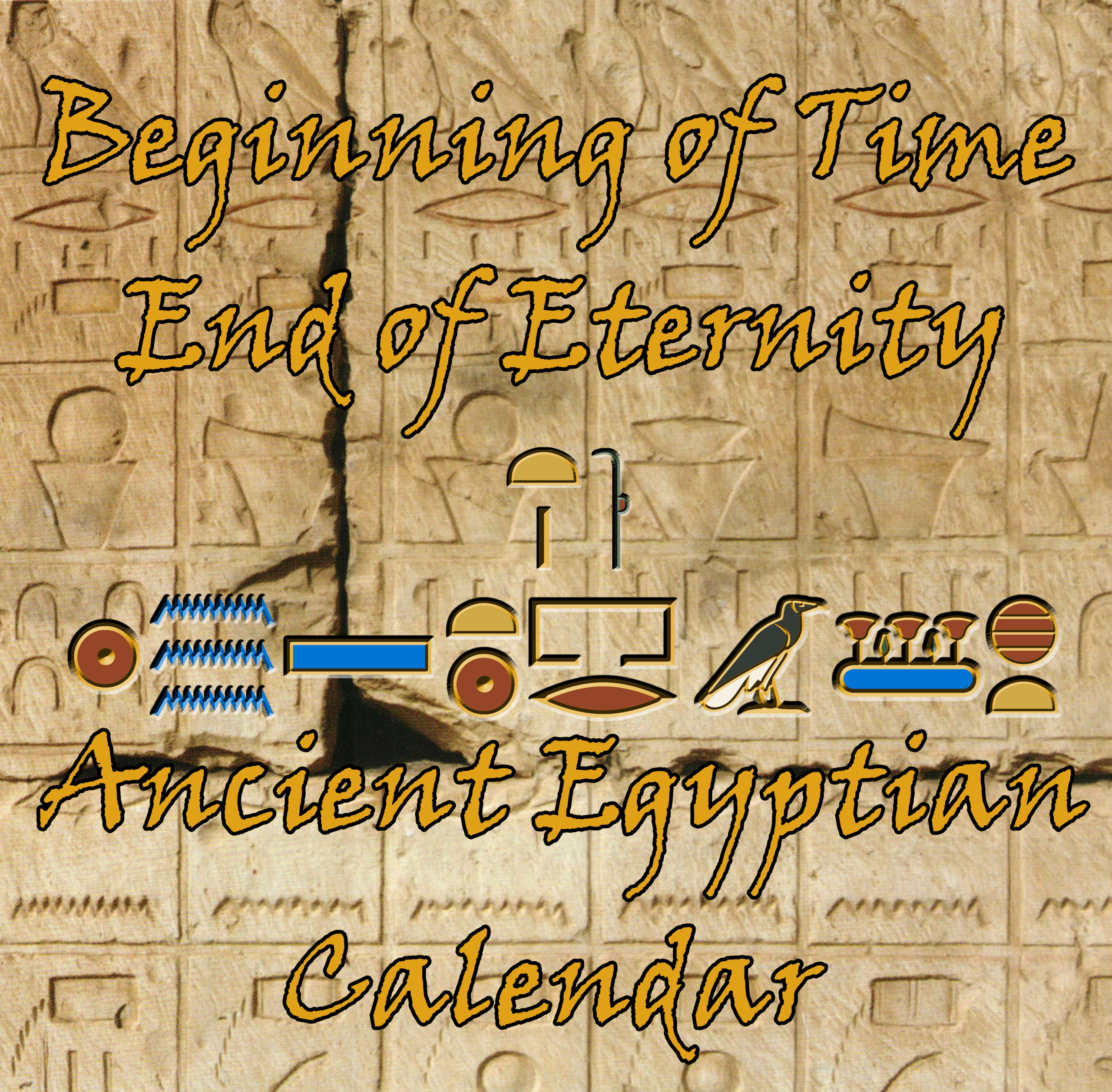
Beginning of Time ~ End of Eternity – Calendar of Ancient Egypt: Days Above the Year
In this episode, we look at the hrw Hryw rnpt, the “Days Above the Year” in the ancient Egyptian calendar. These five added days — created through the wisdom of Thoth — made room for the births of the children of Nut and Geb. They sit outside the normal 360‑day year and mark one of the most important mythological moments in Egyptian timekeeping.
-
Par Madja’at Ancient Egyptian House of Books – Episode 2
Book Review: Ancient Egyptian Literature vol. II: The New Kingdom. Research on the Web: AERA – Ancient Egypt Research Associates, Inc. Electronic Document: An Ancient Egyptian Hunting Ritual by Eberhard Otto. The Par Madja’t of Kamat is located here.
/RSS Feed
