Category: Gods of Ancient Egypt

A deep exploration of the deities of ancient Egypt — their roles, symbols, relationships, and cult centers. Each episode draws from temple inscriptions, hymns, and ritual texts to reveal how the gods functioned within the living fabric of Egyptian spirituality.

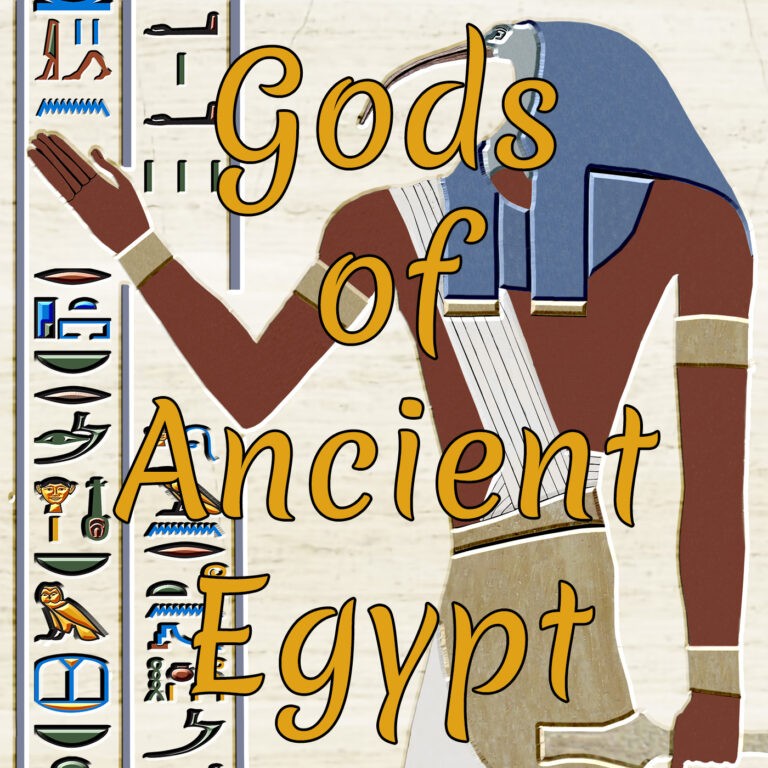
  • Gods of Ancient Egypt: Thoth

    Gods of Ancient Egypt: Thoth

    An in-depth exploration of Thoth, the ancient Egyptian deity of wisdom, writing, and knowledge, detailing his attributes, representations, and significance in Egyptian culture.

    Thoth: The God of Wisdom and Writing ​

    Thoth, known as DHwty in ancient Egyptian, is the deity associated with intelligence, wisdom, and the written word. ​ He is revered as the patron of scribes and the embodiment of reasoning and logic.

    • Thoth is often depicted as an ibis or a baboon, symbolizing his connection to knowledge and the moon. ​
    • His name is derived from the Egyptian DHwty, meaning “He of the Ibis.” ​
    • Thoth was crucial in ancient Egyptian mythology, including creating the 365-day year. ​
    • He is associated with the judgment of the dead, recording the outcomes in the afterlife.
    • Thoth’s consorts include Seshat, the goddess of writing, and Ma’at, the goddess of truth and justice.

    Thoth’s Role in Funerary Practices

    In ancient Egyptian funerary customs, Thoth had significant responsibilities, ensuring safe passage to the afterlife. ​ His presence was invoked in various texts and rituals related to death and judgment.

    • In funerary texts, he is depicted as a protector of tombs and the dead, ensuring their safe journey in the afterlife. ​
    • Thoth is often mentioned in the “Utterances of Going Forth in the Day,” which guide the deceased through the afterlife.
    • He is responsible for recording the judgment of the deceased’s heart against the feather of Ma’at. ​
    • Thoth’s ibis amulets were commonly used in mummification practices.

    Festivals Celebrating Thoth

    Thoth was celebrated through various festivals that honored his contributions to wisdom and the lunar calendar. These festivals were integral to ancient Egypt’s religious and cultural practices.

    • The Festival of Thoth was marked by food and drink offerings, including a thousand beers and bread.
    • The month of Txy, associated with drunkenness, was dedicated to Thoth, highlighting his significance in the lunar calendar. ​
    • Specific days, such as Day 19, honored Thoth and Osiris, celebrating the cycle of death and rebirth.

    Thoth’s Influence on Pharaohs and Royalty

    Thoth had a profound influence on the pharaohs of ancient Egypt. He was often depicted in royal iconography and associated with their divine right to rule. His presence was essential in coronation rituals and royal decrees.

    • Pharaohs like Thutmose III and Amenhotep III had statues of Thoth erected in their honor.
    • Thoth is depicted in scenes where he bestows life and authority upon pharaohs during their coronation.
    • He is often shown alongside other deities, emphasizing his role in Egypt’s divine order and governance.

    Myths and Legends Involving Thoth

    Thoth is central to various myths that explain cosmic order, creation, and the relationship between gods and humanity. His stories illustrate the importance of wisdom and knowledge in maintaining balance in the universe.

    • In the Heliopolitan creation myth, Thoth establishes the 365-day calendar. ​
    • He is depicted as a mediator between gods, often resolving conflicts and restoring order.
    • Thoth’s interactions with other deities, such as Ra and Horus, highlight his significance in the pantheon and his role in the cosmic balance.

    Hermopolis Magna and the Ogdoad

    Hermopolis Magna, known as the “Place of Eight,” is the center of worship for the deity DHwty. It is associated with the creation myth involving the Ogdoad, a group of eight primordial deities. ​ These deities created the cosmic egg from which DHwty emerged, later becoming a significant figure in Egyptian mythology and cosmology. ​

    • DHwty is the lord of Hermopolis Magna, also called el-Ashmunein. ​
    • The Ogdoad consists of eight creator deities, four male and four female. ​
    • DHwty commanded the Ogdoad to create the cosmic egg, leading to the first sunrise. ​
    • Over time, imn-ra displaced DHwty in prominence, becoming the primary deity.

    Sumenu and the Temple of DHwty ​

    Sumenu, also known as Crocodopolis, features a temple dedicated to DHwty, alongside the crocodile god sbk-ra. ​ A notable statue of the Second Prophet of imn-ra, Ay, is inscribed with its dedication to this temple.

    • Sumenu is modern-day Al-Mahamid Qibly.
    • The temple was dedicated to DHwty and sbk-ra. ​
    • A statue of Ay, a high priest, is currently housed in the Brooklyn Museum.

    Dakka and the Kushite Temple

    In Dakka, a temple dedicated to DHwty was established during the Kushite Kingdom, initiated by King Arkamani and later expanded by Ptolemy IV. ​ This temple is associated with the jujube tree, symbolizing DHwty’s waiting for his wife’s return.

    • The temple was built in the third century BCE.
    • It was dedicated to the DHwty of pr-nbs and linked to the jujube tree. ​
    • The temple underwent expansions during the Roman period.

    Dakhla Oasis and DHwty’s Worship

    A temple of DHwty exists in the Dakhla Oasis, where Rameses VI is depicted praising DHwty. ​ This temple highlights the significance of DHwty in the region during the 19th dynasty. ​

    • The temple is located in the western desert st-wAH.
    • Rameses VI’s praises of DHwty are depicted in the temple. ​

    Memphite Theology and DHwty’s Role ​

    The Memphite Theology, inscribed on the Shabaka Stone, emphasizes DHwty’s integral role in creation alongside Ptah. ​ This text illustrates the connection between DHwty and the creation of all deities and spirits.

    • The Shabaka Stone is from the Great Temple of Ptah in Memphis. ​
    • It dates back to the 25th dynasty (744–656 BCE).
    • DHwty is depicted as a key figure in the creation narrative.

    Karnak and the Sacred Ished Tree ​

    At Karnak, DHwty is associated with the sacred iSd tree, which records the Pharaoh’s reign and deeds. ​ This connection underscores DHwty’s role in maintaining cosmic order and knowledge.

    • The iSd tree is considered sacred in ancient Egypt.
    • DHwty or his consort records Pharaoh’s achievements on its leaves. ​

    Cultural Significance of DHwty in Literature ​

    DHwty appears in various significant literary works, including the “Eloquent Peasant” and “Instruction of Amenemopet,” emphasizing his association with wisdom, justice, and moral conduct. ​

    • The “Eloquent Peasant” highlights the importance of mAat and DHwty’s role in justice.
    • “Instruction of Amenemopet” advises on ethical behavior and the consequences of wrongdoing.

    The Leiden Hymns and DHwty’s Wisdom ​

    The Leiden hymns, dating from the reign of Rameses II, extol the wisdom of DHwty, linking him to the divine knowledge sought by the followers of imn-ra. ​ This text reflects the reverence for DHwty’s intellectual legacy.

    • The hymns are from the 52nd regnal year of Rameses II.
    • They emphasize DHwty’s role in wisdom and knowledge.

    The Tale of Setna II and DHwty’s Magic

    The Tale of Setna II narrates the adventures of a prince seeking DHwty’s magical book, illustrating the dangers of violating sacred spaces and the consequences of seeking forbidden knowledge.

    • The story involves the quest for a powerful book of magic.
    • It highlights the repercussions of stealing DHwty’s knowledge.

    Hermeticism and DHwty’s Legacy

    Hermetic texts, attributed to Hermes Trismegistus, reflect DHwty’s syncretism with Greek philosophy and emphasize his enduring influence on various philosophical movements throughout history. ​

    • Hermes Trismegistus is a syncretic deity combining DHwty and Hermes.
    • Hermeticism flourished during the Graeco-Roman period and influenced later philosophical thought.

    Hymn to DHwty from PetOsiris’ Tomb ​

    A hymn from PetOsiris’s tomb praises DHwty as the master of knowledge and guidance, emphasizing the importance of following his teachings for a prosperous life.

    • The hymn highlights DHwty’s role as a guide and protector.
    • It underscores the significance of mAat and ethical living in ancient Egyptian culture. ​

    Ta'wy Podcast Channel
    Ta’wy Podcast Channel
    Gods of Ancient Egypt: Thoth
    Loading
    /
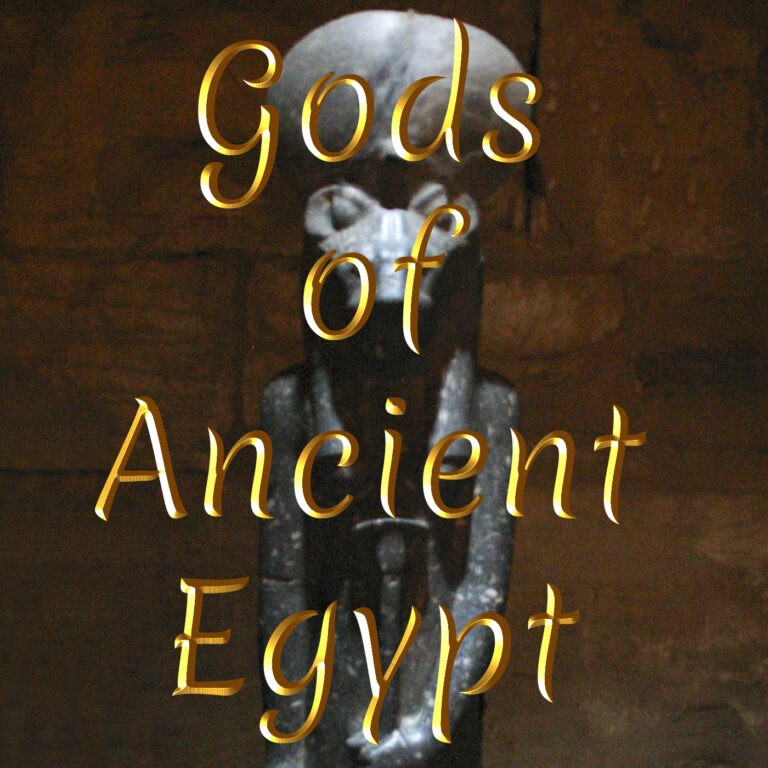
  • Gods of Ancient Egypt: Sakhamat – Sekhmet

    Gods of Ancient Egypt: Sakhamat – Sekhmet

    The episode provides an extensive overview of Sakhamat (Sekhmet), an ancient Egyptian goddess associated with power, war, destruction, healing, and protection. ​ Below is a summary:

    Origins and Mythology: Sakhamat, derived from “sxm” (power) and “t” (female), is a lioness-headed goddess linked to war, destruction, and healing. ​ She is central to the myth of the “Destruction of Mankind,” where she punished humanity at Ra’s command but was pacified by drinking red-dyed beer, mistaking it for blood. ​ This event is commemorated in the festival of drunkenness. ​

    Appearance: Sakhamat is depicted as a lioness or a gold-skinned woman with a lioness head, sun disk headdress, and cobra uraeus. ​ Her attire includes a broad collar and a sheer sheath dress, symbolizing youth and fertility. ​

    Roles and Associations:

    War and Protection: Patroness of pharaohs, she embodies duality as a war goddess and protector. ​ Her destructive powers are bound by righteousness (Ma’at). ​
    Healing and Medicine: Sakhamat controls disease demons (xAtyw) and patronizes physicians. ​ Priests trained in her temples served as healers. ​
    Tree Cults: She is linked to sacred groves and tree cults, alongside other goddesses like Hathor, Bastet, and Isis. ​

    Worship Centers:

    Memphis: Sakhamat was worshipped alongside Ptah and their son Nefertem. She absorbed the local goddess of Memphis. ​
    Karnak: Hundreds of her statues were erected during Amenhotep III’s reign, and she was syncretized with Mut. ​
    Other Sites: Temples and cults dedicated to Sakhamat existed in Kom el-Hisn, Abusir, and other locations. ​

    Rituals and Festivals: Sakhamat was honored in rituals to protect against her “Seven Arrows” of pestilence, with amulets and menat necklaces used to appease her. ​ The festival of drunkenness celebrated her pacification.

    Historical Influence: Sakhamat’s cult persisted through various dynasties, including the Old Kingdom, New Kingdom, and Ptolemaic era, often protecting mortuary temples from dismantlement. ​

    Sakhamat embodies a complex duality as a goddess of destruction and healing, deeply integrated into Egyptian mythology, religion, and royal patronage. ​

    Ta'wy Podcast Channel
    Ta’wy Podcast Channel
    Gods of Ancient Egypt: Sakhamat – Sekhmet
    Loading
    /
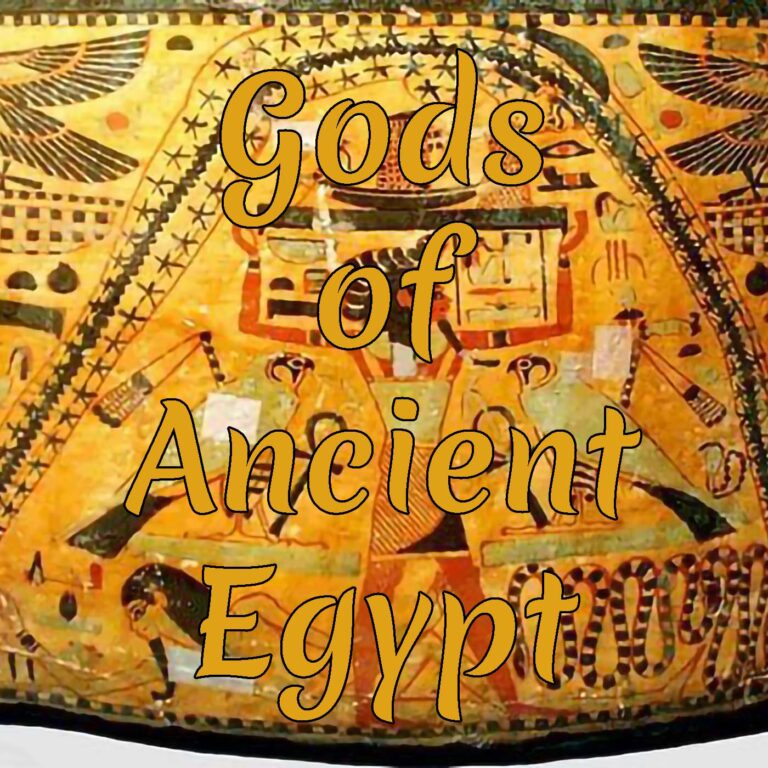
  • Gods of Ancient Egypt: Shu

    Gods of Ancient Egypt: Shu

    Shu was a significant deity in ancient Egyptian mythology, revered as the god of air, light, and peace. He was one of the primordial gods and a member of the Ennead of Heliopolis, a group of nine deities central to Egyptian creation myths.

    Origins and Role

    Shu was created by itmw, the sun god, either by spitting or through self-generation. He was the twin brother and consort of tfnt, the goddess of moisture. Together, they gave birth to Geb (the earth god) and Nut (the sky goddess), making Shu the grandfather of Osiris, Isis, Set, and Nephthys.

    Symbolism and Depictions

    Shu was often depicted as a man wearing an ostrich feather, which symbolized lightness and emptiness. He was also shown holding up the sky, separating Nut from Geb to create space for life to exist. This act was crucial in Egyptian cosmology, as it established the duality of above and below, light and dark, order and chaos.

    Associations and Myths

    • Shu was associated with wind, air, and fog, which were sometimes referred to as his “bones.”
    • He was seen as a calming force, representing balance and truth (Ma’at).
    • In later myths, Shu was linked to Atlas, the Greek Titan who held up the heavens.

    Shu played a vital role in maintaining cosmic order, ensuring that the sky remained separate from the earth. His presence was believed to bring peace and stability, making him a revered figure in Egyptian religion.

    Ta'wy Podcast Channel
    Ta’wy Podcast Channel
    Gods of Ancient Egypt: Shu
    Loading
    /
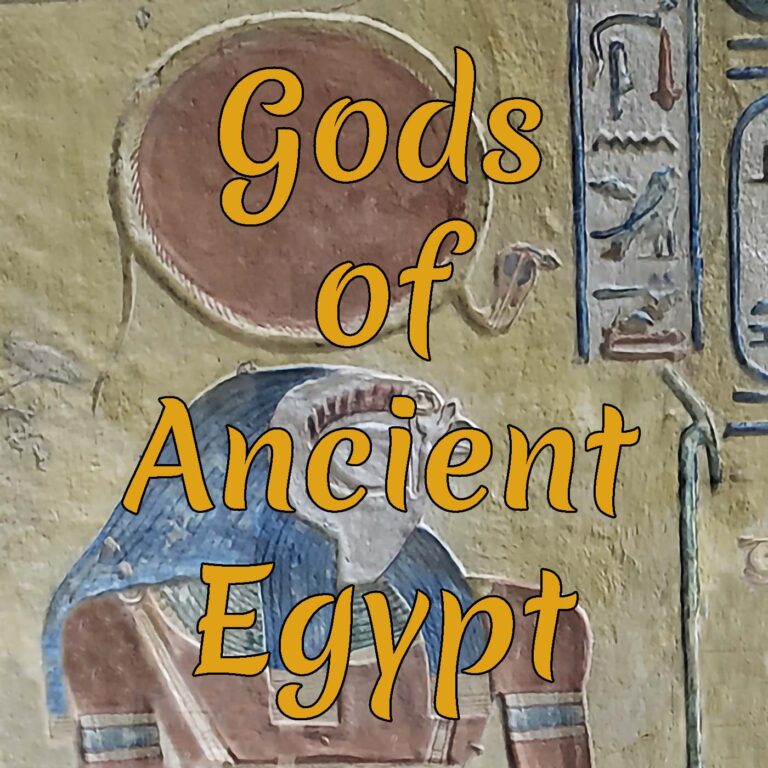
  • Gods of Ancient Egypt – Ra

    Gods of Ancient Egypt – Ra

    The document provides an extensive overview of Ra, the ancient Egyptian sun god, highlighting his significance, mythology, and worship. ​ Ra is described as a transcendent deity often syncretized with other gods, such as Atum, Khnum, Amun, and Horus, representing different aspects of creation and the sun’s cycle (morning, midday, and evening). ​ His mythos includes his role as the creator, his struggles against adversaries like Apep in the underworld, and his interactions with other gods, such as Isis, who gained his secret name to save him from venom. Ra’s worship dates back to the Second Dynasty and peaked during the Old Kingdom, where rulers were considered “Sons of Ra” and temples with obelisks symbolized his power. ​

    Ra’s myths include the Bennu bird, akin to the phoenix, symbolizing creation and renewal. ​ He is depicted as a falcon-headed man with a sun disc and cobra headdress, traveling in his night boat through the underworld. ​ His eye, represented by Hathor and Sekhmet, is a powerful force used to punish humanity. ​ Ra’s daily journey across the sky and his role in creation are celebrated in hymns, emphasizing his perfection, radiance, and eternal labor. ​

    Ta'wy Podcast Channel
    Ta’wy Podcast Channel
    Gods of Ancient Egypt – Ra
    Loading
    /