Book Summary and Review: Ancient Egyptian Medicine by John F. Nunn. Research on the web: American Research Center in Egypt ARCE’s E-Newsletter, ASOR The American Schools of Oriental Research, A 20-sided die of Ptolemaic origin, the Theban Mapping Project TMP. Electronic Documents: The Bremner-Rhind Papyrus—II By R. O. Faulkner Part D. The Book of Overthrowing Of Apep. Ceremonial Games of The New Kingdom By John A. Wilson. Cosmetics, Perfumes, and Incense in Ancient Egypt By A. Lucas. The Costume of An Ancient Egyptian Priest By H. E. Winlock.
Category: Ta’wy Podcast Channel – Wisdom for the Ear from Ancient Egypt
Ta’wy Podcast Channel teaches facets of ancient Egyptian culture.
-

Beginning of Time ~ End of Eternity – Calendar of Ancient Egypt: Days Above the Year
In this episode, we look at the hrw Hryw rnpt, the “Days Above the Year” in the ancient Egyptian calendar. These five added days — created through the wisdom of Thoth — made room for the births of the children of Nut and Geb. They sit outside the normal 360‑day year and mark one of the most important mythological moments in Egyptian timekeeping.
-

Par Madja’at Ancient Egyptian House of Books – Episode 2
Book Review: Ancient Egyptian Literature vol. II: The New Kingdom. Research on the Web: AERA – Ancient Egypt Research Associates, Inc. Electronic Document: An Ancient Egyptian Hunting Ritual by Eberhard Otto. The Par Madja’t of Kamat is located here.
/RSS Feed -

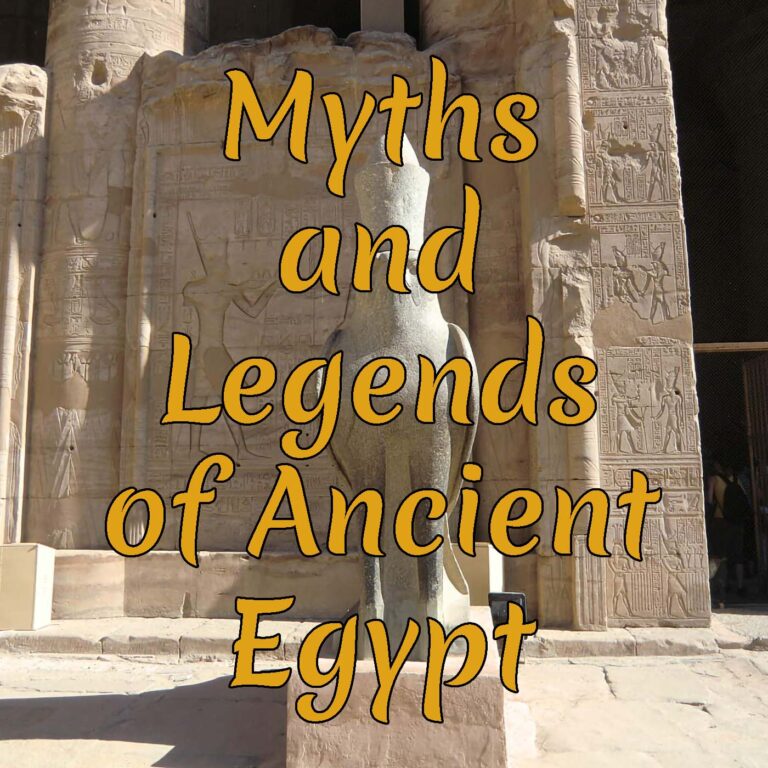
Myths and Legends of Ancient Egypt: Reckoning of the Mounds of the Primeval Time
Myths and Legends of Ancient Egypt: The Reckoning of the Mounds of Primeval Time is a dramatic retelling of the creation myth associated with the Temple of Horus at Edfu. The story explores the cosmogeny of ancient Egypt, focusing on the primeval mounds that emerged from the waters of chaos at the dawn of time. It highlights the role of Ra, Horus, and other deities in shaping the world and establishing order. The myth is deeply tied to Behdet, an ancient name for Edfu, and reflects Egyptian beliefs about divine rulership and cosmic balance. You can find more details here.
/RSS Feed -

Beginning of Time ~ End of Eternity – Calendar of Ancient Egypt: Introduction to the Ancient Egyptian Calendar
In the introduction to the ancient Egyptian calendar, you discover the several calendars used by the ancient Egyptians and the celestial or seasonal events that synchronize them. Topics covered include the lunar, solar, cosmic, and regnal calendars, as well as the so-called horoscope calendar of lucky and unlucky days. It provides an in-depth overview of the Egyptian religious and civil calendars, their structure, significance, and associated festivities. The episode explores the Sothic Cycle, an ancient Egyptian astronomical system used to track time based on the heliacal rising of the star Sirius (Sothis).
The episode explores the connection between the Egyptian calendar and astronomical phenomena, particularly the heliacal rising of Sirius. It discusses the Egyptian year, which consisted of 365 days and receded one day every four years compared to the Julian year, forming a cycle of 1461 years known as the Sothic cycle. The author examines historical records, inscriptions, and calculations to analyze the alignment of the Egyptian calendar with the rising of Sirius and the implications for dating events.
The ancient Egyptian calendar evolved from natural observations to a fixed system, reflecting both practical needs and cultural traditions. Its endurance highlights the interplay between astronomy, agriculture, and societal organization in ancient Egypt.
/RSS Feed -

Par Madja’at Ancient Egyptian House of Books Episode 1
This episode reviews the book Fighting Pharaohs: Weapons and Warfare in Ancient Egypt by Robert B. Partridge, which explores the military history of ancient Egypt, detailing the weapons, strategies, and battles that shaped the kingdom’s power. The book examines the evolution of Egyptian warfare, from early conflicts to the sophisticated military campaigns of the New Kingdom. It covers the use of chariots, bows, spears, and swords, as well as the role of pharaohs as military leaders. The text also discusses fortifications, naval warfare, and the influence of foreign technology on Egyptian military advancements. You can find more details here.,
The journal article “Notes on the Opening of the Mouth” by T. J. C. Baly examines the ancient Egyptian Opening of the Mouth ritual, a funerary ceremony intended to restore the senses and vitality of the deceased. The text critically analyzes previous interpretations of the ritual, discussing its symbolic connection to rebirth, the Horus Eye, and the transition to the afterlife. Baly explores the role of the Sem priest, the use of sacred implements, and the ritual’s connection to funerary rites involving the Tekenu figure. His work provides a scholarly foundation for further studies on Egyptian religious practices. You can find more details here, as well as research on the Web, in the Giza Digital Library: The Giza Mastabas Series.
/RSS Feed -

Myths and Legends of Ancient Egypt – Judgment of Horus and Seth
The Judgment of Horus and Seth, also known as the Contendings of Horus and Seth, is an ancient Egyptian myth that recounts the story of the gods’ struggle for the throne of Egypt following the death of Osiris. The conflict between Horus, Osiris’ son, and Seth, Osiris’ brother, lasted for decades and involved numerous trials and contests to determine who was the rightful ruler.
Key Events
- After Seth murdered Osiris, Horus claimed the throne as his birthright, but Seth argued that he was stronger and more capable of ruling.
- The gods of the Ennead, led by Ra, acted as judges in the dispute.
- Horus and Seth engaged in various competitions, including boat races, wrestling matches, and magical duels.
- At one point, Seth attempted to humiliate Horus by assaulting him, but Horus’ mother, Isis, intervened.
- The gods debated for years, with some supporting Seth and others favoring Horus.
- Eventually, Osiris himself intervened from the afterlife, demanding justice for his son.
- The gods finally ruled in favor of Horus, declaring him the rightful king of Egypt.
This myth was significant in Egyptian culture because it reinforced the idea of divine kingship, legitimizing the rule of pharaohs as descendants of Horus. It also symbolized the eternal struggle between order (Ma’at) and chaos, with Horus representing stability and Seth embodying disorder.
/RSS Feed -

Ancient Egyptian Literature – The Book of Thoth
The Book of Thoth refers to various ancient Egyptian texts attributed to Thoth, the god of writing, wisdom, and magic. It is often described as containing all knowledge of laws, magic, nature, and the afterlife.
Origins and Mythology
The Book of Thoth is a figure in Egyptian mythology, particularly in a story about Prince Neferkaptah, who stole the book from its hidden location at the bottom of the Nile near Coptos. The book was locked inside a series of boxes guarded by serpents. After retrieving it, Neferkaptah suffered divine punishment—his wife and son were killed, and he eventually took his own life.
Contents and Significance
- The book was said to contain two powerful spells:
- One allowed the reader to understand the speech of animals.
- The other granted the ability to perceive the gods themselves.
- Egyptian priests attributed many writings to Thoth, believing he was the source of all knowledge.
- Some texts associated with the Book of Thoth discuss scribal work, sacred animals, and the Duat (the realm of the dead).
The Book of Thoth remains a fascinating part of Egyptian mythology, symbolizing hidden wisdom and the dangers of seeking forbidden knowledge.
/RSS Feed -

Great Pharaohs of Ancient Egypt: Rameses II
Ramesses II, also known as Ramesses the Great, was one of ancient Egypt’s most powerful and celebrated pharaohs. He ruled during the 19th Dynasty from 1279 to 1213 BCE. His reign lasted 66 years, making it one of the longest in Egyptian history.
Key Achievements
- Military Campaigns: He led numerous military expeditions, including the famous Battle of Kadesh against the Hittites, which resulted in the world’s first known peace treaty.
- Monumental Construction: Ramesses II was a prolific builder, commissioning grand temples such as Abu Simbel, the Ramesseum, and additions to Karnak.
- Political Influence: He expanded Egypt’s influence across the region, securing trade routes and fortifying borders.
- Personal Life: He had over 200 wives and concubines, fathered 96 sons and 60 daughters, and lived to be around 90 years old.
Ramesses II’s legacy endures through his monumental architecture and inscriptions, which can be found throughout Egypt. His mummy is now displayed at the National Museum of Egyptian Civilization in Cairo. He was so revered that later Egyptians referred to him as the “Great Ancestor”.
/RSS Feed