Tag: Egyptology

  • Myths and Legends of Ancient Egypt – Judgment of Horus and Seth

    Myths and Legends of Ancient Egypt – Judgment of Horus and Seth

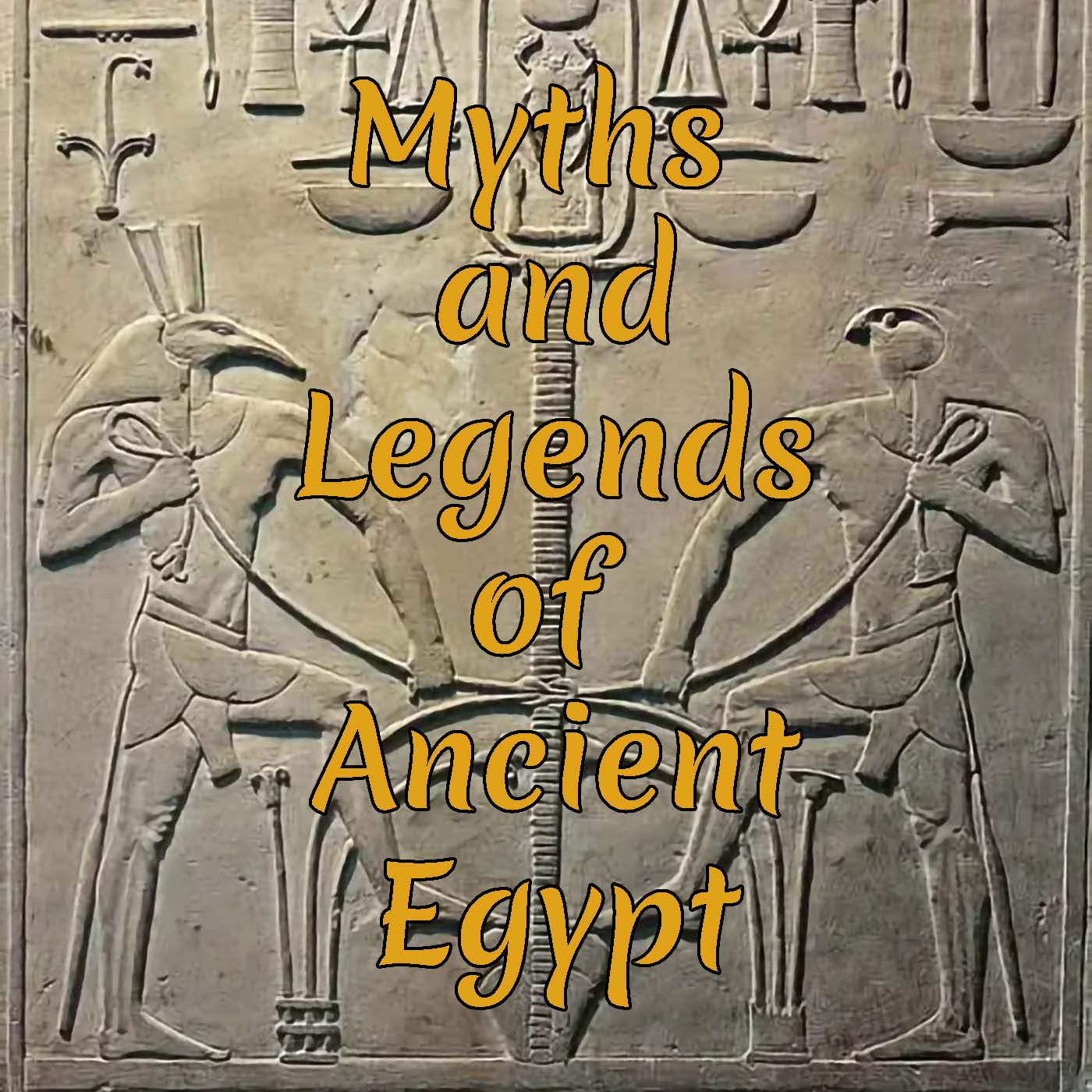
    The Judgment of Horus and Seth, also known as the Contendings of Horus and Seth, is an ancient Egyptian myth that recounts the story of the gods’ struggle for the throne of Egypt following the death of Osiris. The conflict between Horus, Osiris’ son, and Seth, Osiris’ brother, lasted for decades and involved numerous trials and contests to determine who was the rightful ruler.

    Key Events

    • After Seth murdered Osiris, Horus claimed the throne as his birthright, but Seth argued that he was stronger and more capable of ruling.
    • The gods of the Ennead, led by Ra, acted as judges in the dispute.
    • Horus and Seth engaged in various competitions, including boat races, wrestling matches, and magical duels.
    • At one point, Seth attempted to humiliate Horus by assaulting him, but Horus’ mother, Isis, intervened.
    • The gods debated for years, with some supporting Seth and others favoring Horus.
    • Eventually, Osiris himself intervened from the afterlife, demanding justice for his son.
    • The gods finally ruled in favor of Horus, declaring him the rightful king of Egypt.

    This myth was significant in Egyptian culture because it reinforced the idea of divine kingship, legitimizing the rule of pharaohs as descendants of Horus. It also symbolized the eternal struggle between order (Ma’at) and chaos, with Horus representing stability and Seth embodying disorder.
    Ta'wy Podcast Channel
    Ta’wy Podcast Channel
    Myths and Legends of Ancient Egypt – Judgment of Horus and Seth
    Loading
    /
  • Ancient Egyptian Literature – The Book of Thoth

    Ancient Egyptian Literature – The Book of Thoth

    The Book of Thoth refers to various ancient Egyptian texts attributed to Thoth, the god of writing, wisdom, and magic. It is often described as containing all knowledge of laws, magic, nature, and the afterlife.

    Origins and Mythology

    The Book of Thoth is a figure in Egyptian mythology, particularly in a story about Prince Neferkaptah, who stole the book from its hidden location at the bottom of the Nile near Coptos. The book was locked inside a series of boxes guarded by serpents. After retrieving it, Neferkaptah suffered divine punishment—his wife and son were killed, and he eventually took his own life.

    Contents and Significance

    • The book was said to contain two powerful spells:
    1. One allowed the reader to understand the speech of animals.
    2. The other granted the ability to perceive the gods themselves.
    • Egyptian priests attributed many writings to Thoth, believing he was the source of all knowledge.
    • Some texts associated with the Book of Thoth discuss scribal work, sacred animals, and the Duat (the realm of the dead).

    The Book of Thoth remains a fascinating part of Egyptian mythology, symbolizing hidden wisdom and the dangers of seeking forbidden knowledge.

    Ta'wy Podcast Channel
    Ta’wy Podcast Channel
    Ancient Egyptian Literature – The Book of Thoth
    Loading
    /
  • Gods of Ancient Egypt: Shu

    Gods of Ancient Egypt: Shu

    Shu was a significant deity in ancient Egyptian mythology, revered as the god of air, light, and peace. He was one of the primordial gods and a member of the Ennead of Heliopolis, a group of nine deities central to Egyptian creation myths.

    Origins and Role

    Shu was created by itmw, the sun god, either by spitting or through self-generation. He was the twin brother and consort of tfnt, the goddess of moisture. Together, they gave birth to Geb (the earth god) and Nut (the sky goddess), making Shu the grandfather of Osiris, Isis, Set, and Nephthys.

    Symbolism and Depictions

    Shu was often depicted as a man wearing an ostrich feather, which symbolized lightness and emptiness. He was also shown holding up the sky, separating Nut from Geb to create space for life to exist. This act was crucial in Egyptian cosmology, as it established the duality of above and below, light and dark, order and chaos.

    Associations and Myths

    • Shu was associated with wind, air, and fog, which were sometimes referred to as his “bones.”
    • He was seen as a calming force, representing balance and truth (Ma’at).
    • In later myths, Shu was linked to Atlas, the Greek Titan who held up the heavens.

    Shu played a vital role in maintaining cosmic order, ensuring that the sky remained separate from the earth. His presence was believed to bring peace and stability, making him a revered figure in Egyptian religion.

    Ta'wy Podcast Channel
    Ta’wy Podcast Channel
    Gods of Ancient Egypt: Shu
    Loading
    /
  • Myths and Legends of Ancient Egypt – The Destruction of Mankind

    Myths and Legends of Ancient Egypt – The Destruction of Mankind

    The Destruction of Mankind is a dramatic myth from ancient Egyptian mythology, found in the Book of the Heavenly Cow. It tells the story of how the sun god Ra sought to punish humanity for their rebellion against him.

    According to the myth, Ra, growing old and weary, overheard humans plotting against him. Enraged, he summoned the other gods for counsel, and they advised him to unleash his Eye, which took the form of the fierce goddess Hathor (who later transformed into Sekhmet) to carry out the destruction. Sekhmet became a bloodthirsty force, slaughtering humans mercilessly.

    However, Ra soon regretted the devastation and sought to stop Sekhmet. To do so, he tricked her by flooding the land with red-dyed beer, making it resemble blood. Sekhmet, thinking it was blood, drank it and became intoxicated, losing her desire for destruction. Thus, humanity was spared, but the myth explains the introduction of suffering and death into the world.

    This tale reflects themes of divine justice, punishment, and mercy, showing the balance between destruction and salvation in Egyptian belief systems. It also highlights the power of Ra and the dual nature of Hathor/Sekhmet as both a nurturing and destructive force.

    Ta'wy Podcast Channel
    Ta’wy Podcast Channel
    Myths and Legends of Ancient Egypt – The Destruction of Mankind
    Loading
    /
  • Gods of Ancient Egypt – Ra

    Gods of Ancient Egypt – Ra

    The document provides an extensive overview of Ra, the ancient Egyptian sun god, highlighting his significance, mythology, and worship. ​ Ra is described as a transcendent deity often syncretized with other gods, such as Atum, Khnum, Amun, and Horus, representing different aspects of creation and the sun’s cycle (morning, midday, and evening). ​ His mythos includes his role as the creator, his struggles against adversaries like Apep in the underworld, and his interactions with other gods, such as Isis, who gained his secret name to save him from venom. Ra’s worship dates back to the Second Dynasty and peaked during the Old Kingdom, where rulers were considered “Sons of Ra” and temples with obelisks symbolized his power. ​

    Ra’s myths include the Bennu bird, akin to the phoenix, symbolizing creation and renewal. ​ He is depicted as a falcon-headed man with a sun disc and cobra headdress, traveling in his night boat through the underworld. ​ His eye, represented by Hathor and Sekhmet, is a powerful force used to punish humanity. ​ Ra’s daily journey across the sky and his role in creation are celebrated in hymns, emphasizing his perfection, radiance, and eternal labor. ​

    Ta'wy Podcast Channel
    Ta’wy Podcast Channel
    Gods of Ancient Egypt – Ra
    Loading
    /
  • Ancient Egyptian Literature – Pharaoh Khufu and the Tales of the Haka’ayu-Magicians

    Ancient Egyptian Literature – Pharaoh Khufu and the Tales of the Haka’ayu-Magicians

    A dramatic retelling of the fourth story of the Westcar Papyrus is told by Hardedef, son of Khufu, and takes place during Khufu’s reign. Hardedef tells his father about a magician named Dedi, who possesses incredible abilities—he can reattach a severed head onto an animal and tame a wild lion. He also claims that Dedi has knowledge about the Temple of Thoth.

    Intrigued, Khufu orders Hardedef to bring Dedi to his court. When asked to demonstrate his magic, Dedi refuses to perform on a human but agrees to sever and reattach the heads of a goose, a waterfowl, and an ox. Khufu then asks Dedi about the Temple of Thoth, hoping to learn its secrets, but Dedi reveals that while he does not know the number of rooms in the temple, he knows its location. However, he refuses to share further details, stating that the one destined to access the temple is the firstborn of three future pharaohs—Userkaf, the first king of the Fifth Dynasty, who will be born to Reddjedet, the wife of a priest of Ra.

    This story serves as a prophecy establishing the legitimacy of Userkaf, Sahure, and Neferirkara Kakai, contrasting their pious rule with Khufu’s reputation for impiety. Some scholars interpret the tale as a morality story, suggesting that Khufu’s pursuit of forbidden knowledge contributed to the downfall of his dynasty.

    Ta'wy Podcast Channel
    Ta’wy Podcast Channel
    Ancient Egyptian Literature – Pharaoh Khufu and the Tales of the Haka’ayu-Magicians
    Loading
    /
  • Myths and Legends of Ancient Egypt: Horus Behdety and the Winged Disk

    Myths and Legends of Ancient Egypt: Horus Behdety and the Winged Disk

    This episode narrates the mythological tale of Horus-Behdety, a form of the Egyptian god Horus, and his battles against the enemies of Ra, the sun god. ​ The story unfolds as Ra and his followers, including Horus-Behdety, embark on a journey to defeat conspirators and enemies who take the forms of crocodiles, hippopotami, and other fiends associated with Seth, the god of chaos. ​
    Key events include:

    Horus-Behdety’s Transformation: Horus-Behdety transforms into the Winged Disk (Apy) and defeats enemies in the heights of heaven, earning titles such as “Great God, Lord of Heaven.” ​
    Battles on Land and Water: Horus-Behdety leads attacks against enemies on land and water, using weapons like spears and chains. He slaughters crocodiles, hippopotami, and other foes, often with the help of metalworkers and divine allies like Nekhbet and Wadjet.
    Sacred Places and Names: The myth establishes the names of various locations, sanctuaries, and objects based on the events of the battles. ​ For example, cities like Teb, Tekhet-met, and Heben are named after Horus-Behdety’s victories. ​
    Seth’s Defeat: Seth, the primary antagonist, is ultimately defeated by Horus-Behdety and Harsiese. ​ Seth’s head is severed, and his fiends are destroyed, symbolizing the triumph of order over chaos. ​
    Symbolism of the Winged Disk: The Winged Disk becomes a protective symbol placed in temples and sanctuaries to ward off evil. ​ It represents Horus-Behdety’s power and victory. ​
    Festivals and Rituals: The myth establishes specific festivals and ceremonies to commemorate Horus-Behdety’s victories, including the “Festival of Sailing.” ​

    The story emphasizes themes of divine protection, the triumph of order over chaos, and the establishment of sacred traditions and symbols in ancient Egyptian religion.

    Ta'wy Podcast Channel
    Ta’wy Podcast Channel
    Myths and Legends of Ancient Egypt: Horus Behdety and the Winged Disk
    Loading
    /
  • Great Pharaohs of Ancient Egypt: Thutmose III

    Great Pharaohs of Ancient Egypt: Thutmose III

    The episode is about Thutmose III, Pharaoh of Ancient Egypt, focusing on his life, military achievements, and legacy. ​
    Key Points:

    Introduction: The speech begins with an Ancient Egyptian greeting and introduces Thutmose III, emphasizing his significance as a military strategist who restored Egypt’s empire after a period of weakness under his predecessors. ​

    Early Life and Co-Regency with Hatshepsut: Thutmose III’s father died when he was young, leading to his half-sister Hatshepsut becoming regent. ​ She later crowned herself Pharaoh, sidelining Thutmose. ​ While Hatshepsut focused on building projects and propaganda, Thutmose prepared himself as a military commander. ​

    Military Campaigns: After Hatshepsut’s death, Thutmose III emerged as a warrior Pharaoh, leading campaigns to expand Egypt’s borders. ​ His most notable victory was the conquest of Megiddo, achieved through brilliant strategy and military prowess. ​

    Triumphant Return and Legacy: Thutmose III celebrated his victories by commissioning monuments and securing his empire through annual marches, hostage diplomacy, and appointing his son Amenhotep II as co-regent. ​ He also erased Hatshepsut’s legacy to ensure his progeny’s succession. ​

    Conclusion: The speech highlights Thutmose III’s role in protecting and expanding Egypt, enabling the construction of its iconic monuments. ​

    Sources:
    The episode references multiple historical texts, including works by Elizabeth Ann Payne, Robert B. Partridge, Mark Healy, and others, to support its claims. ​

    Ta'wy Podcast Channel
    Ta’wy Podcast Channel
    Great Pharaohs of Ancient Egypt: Thutmose III
    Loading
    /
  • Ancient Egyptian Literature – Great Dispenser of Pleasure

    Ancient Egyptian Literature – Great Dispenser of Pleasure

    A recitation of poems from Papyrus Harris 500, the ‘love songs’ from Ancient Egypt.

    The Papyrus Harris 500 is an ancient Egyptian manuscript from the Ramesside Period (1292–1077 BC). It contains a collection of texts, including The Doomed Prince, The Taking of Joppa, love poems, and the Harper’s Song from the tomb of King Intef. The papyrus was originally part of the collection of Anthony Charles Harris and was later acquired by the British Museum. Unfortunately, parts of the original manuscript were lost due to an explosion that damaged the house where it was kept.

    The love poems in Papyrus Harris 500 offer a glimpse into ancient Egypt’s emotions and romantic ideals. These poems, written in Late Egyptian hieratic script, celebrate themes of beauty, longing, devotion, and the joys of love. They often use nature imagery, comparing lovers to flowers, birds, and the Nile, and emphasize the intensity of desire between partners.

    One poem describes a lover’s yearning:
    “My heart longs for you, like the lotus thirsts for water.”

    Another speaks of the pain of separation:
    “I am like a captive bird, waiting for your return.”

    These poems reflect the deep emotional connections valued in ancient Egyptian society and show that love—its joys and sorrows—has remained timeless across cultures and centuries.

    Ta'wy Podcast Channel
    Ta’wy Podcast Channel
    Ancient Egyptian Literature – Great Dispenser of Pleasure
    Loading
    /