Tag: New Kingdom

  • Ancient Egyptian Literature – The Battle of Kadesh

    Ancient Egyptian Literature – The Battle of Kadesh

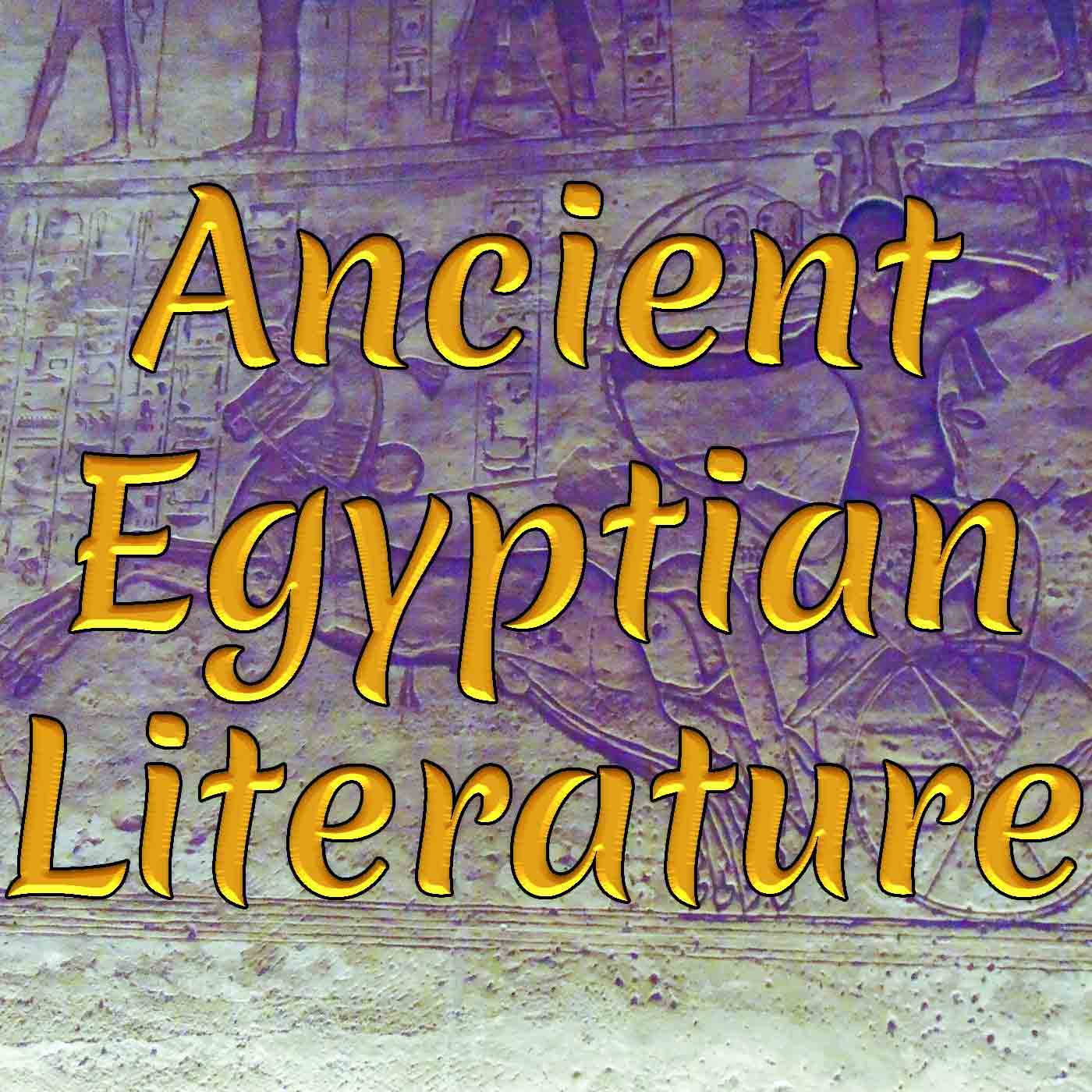
    In this episode of Ancient Egyptian Literature, we are delving into the Battle of Kadesh, a monumental military action between Rameses the Great and the Hittites. Two versions of this story appear in ancient Egypt. The first, the official report, also called the bulletin, with seven copies found, and the second, dubbed the Poem of pntAwrt, with eight copies, are found inscribed, sometimes side by side, at the Ramesseum, Rameses’ funerary temple, the temple of Amun at Karnak, Abydos, and Abu Simbel.

    The Battle of Kadesh was a significant military conflict between Rameses II (Rameses the Great) of Egypt and the Hittites, led by King Mutawallis, in 1275 BCE. ​ It occurred near the fortified city of Kadesh in northern Syria, a strategic location contested by Egypt and Hatti for centuries due to its importance in controlling the Syrian plain. ​

    Rameses II aimed to reclaim territories in the Levant that had been lost to the Hittites during earlier dynasties. ​ He assembled a large army of 20,000 men, divided into four divisions (Amun, Ra, Ptah, and Seth), and marched northward. ​ Aware of Rameses’ ambitions, the Hittites organized a massive army of allied states, numbering up to 37,000 infantry and 3,700 chariots. ​

    Hittite spies misled Rameses into believing the enemy was far away in Aleppo, but the Hittite forces were concealed behind Kadesh. As Rameses camped with the Division of Amun, the Hittites launched a surprise attack on the Division of Ra, causing chaos and retreat. ​ The Hittite chariots advanced toward Rameses’ camp, scattering the Division of Amun. ​

    Despite being surrounded and abandoned by much of his army, Rameses rallied his elite chariotry and fought back, turning the tide of the battle. ​ Reinforcements from the elite unit “nfrw” arrived and helped crush the Hittite forces. ​ Mutawallis sent a second wave of troops, but were defeated as they attempted to plunder Rameses’ camp.

    Ultimately, Rameses regrouped his forces and prepared for a counterattack, prompting Mutawallis to request an armistice. ​ Rameses agreed and returned to Egypt, but the Hittites later retook the city of Amurru, undoing Egypt’s earlier gains. ​

    The battle is notable for its detailed accounts left by Rameses, including the “Official Report” and the “Poem of Pentawer,” which glorify his role in the conflict. ​ While the battle ended inconclusively, it demonstrated Rameses’ military prowess and marked a pivotal moment in Egyptian-Hittite relations. ​

    Patreon patrons receive the full 54-minute episode, which includes a complete dramatic retelling of the texts and an accompanying discussion of Rameses’ armies, the battle, and surrounding events. They also receive a 26-page illustrated eBook with discussion, maps, a glossary, and access to peer-reviewed reference materials from the Par Madja’at—House of Ancient Egyptian Books.
    Ta'wy Podcast Channel
    Ta’wy Podcast Channel
    Ancient Egyptian Literature – The Battle of Kadesh
    Loading
    /
  • Beginning of Time ~ End of Eternity – Calendar of Ancient Egypt: First Month of Inundation – Drunkenness

    Beginning of Time ~ End of Eternity – Calendar of Ancient Egypt: First Month of Inundation – Drunkenness

    In this episode, we explore the first month of the ancient Egyptian inundation season, dedicated to the god Thoth. Drawing on temple calendars and ancient texts, we look at the major festivals, daily rituals, and mythological events that shaped this month — including the Opening of the Year, the Wag Festival, and the Festival of Drunkenness. It’s a guided walk through how the Egyptians understood time, renewal, and the divine order of the year.

    Ta'wy Podcast Channel
    Ta’wy Podcast Channel
    Beginning of Time ~ End of Eternity – Calendar of Ancient Egypt: First Month of Inundation – Drunkenness
    Loading
    /
  • Par Madja’at Ancient Egyptian House of Books Episode 3

    Par Madja’at Ancient Egyptian House of Books Episode 3

    Book Summary and Review: Ancient Egyptian Medicine by John F. Nunn. Research on the web: American Research Center in Egypt ARCE’s E-Newsletter, ASOR The American Schools of Oriental Research, A 20-sided die of Ptolemaic origin, the Theban Mapping Project TMP. Electronic Documents: The Bremner-Rhind Papyrus—II By R. O. Faulkner Part D. The Book of Overthrowing Of Apep. Ceremonial Games of The New Kingdom By John A. Wilson. Cosmetics, Perfumes, and Incense in Ancient Egypt By A. Lucas. The Costume of An Ancient Egyptian Priest By H. E. Winlock.

    Ta'wy Podcast Channel
    Ta’wy Podcast Channel
    Par Madja’at Ancient Egyptian House of Books Episode 3
    Loading
    /
  • The Trumpets of Pharaoh Tutankhamun

    The Trumpets of Pharaoh Tutankhamun

    On April 16th, 1939, after three mute millennia, the trumpets were finally played by James Tappern, a British bandsman, during a BBC radio broadcast from the Cairo Museum; it was heard by millions of listeners around the world. 

  • Beginning of Time ~ End of Eternity – Calendar of Ancient Egypt: Introduction to the Ancient Egyptian Calendar

    Beginning of Time ~ End of Eternity – Calendar of Ancient Egypt: Introduction to the Ancient Egyptian Calendar

    In the introduction to the ancient Egyptian calendar, you discover the several calendars used by the ancient Egyptians and the celestial or seasonal events that synchronize them. Topics covered include the lunar, solar, cosmic, and regnal calendars, as well as the so-called horoscope calendar of lucky and unlucky days. It provides an in-depth overview of the Egyptian religious and civil calendars, their structure, significance, and associated festivities. The episode explores the Sothic Cycle, an ancient Egyptian astronomical system used to track time based on the heliacal rising of the star Sirius (Sothis). ​

    The episode explores the connection between the Egyptian calendar and astronomical phenomena, particularly the heliacal rising of Sirius. ​ It discusses the Egyptian year, which consisted of 365 days and receded one day every four years compared to the Julian year, forming a cycle of 1461 years known as the Sothic cycle. ​ The author examines historical records, inscriptions, and calculations to analyze the alignment of the Egyptian calendar with the rising of Sirius and the implications for dating events.

    The ancient Egyptian calendar evolved from natural observations to a fixed system, reflecting both practical needs and cultural traditions. ​ Its endurance highlights the interplay between astronomy, agriculture, and societal organization in ancient Egypt. ​

    Ta'wy Podcast Channel
    Ta’wy Podcast Channel
    Beginning of Time ~ End of Eternity – Calendar of Ancient Egypt: Introduction to the Ancient Egyptian Calendar
    Loading
    /
  • Par Madja’at Ancient Egyptian House of Books Episode 1

    Par Madja’at Ancient Egyptian House of Books Episode 1

    This episode reviews the book Fighting Pharaohs: Weapons and Warfare in Ancient Egypt by Robert B. Partridge, which explores the military history of ancient Egypt, detailing the weapons, strategies, and battles that shaped the kingdom’s power. The book examines the evolution of Egyptian warfare, from early conflicts to the sophisticated military campaigns of the New Kingdom. It covers the use of chariots, bows, spears, and swords, as well as the role of pharaohs as military leaders. The text also discusses fortifications, naval warfare, and the influence of foreign technology on Egyptian military advancements. You can find more details here.,

    The journal article “Notes on the Opening of the Mouth” by T. J. C. Baly examines the ancient Egyptian Opening of the Mouth ritual, a funerary ceremony intended to restore the senses and vitality of the deceased. The text critically analyzes previous interpretations of the ritual, discussing its symbolic connection to rebirth, the Horus Eye, and the transition to the afterlife. Baly explores the role of the Sem priest, the use of sacred implements, and the ritual’s connection to funerary rites involving the Tekenu figure. His work provides a scholarly foundation for further studies on Egyptian religious practices. You can find more details here, as well as research on the Web, in the Giza Digital Library: The Giza Mastabas Series.

    Ta'wy Podcast Channel
    Ta’wy Podcast Channel
    Par Madja’at Ancient Egyptian House of Books Episode 1
    Loading
    /
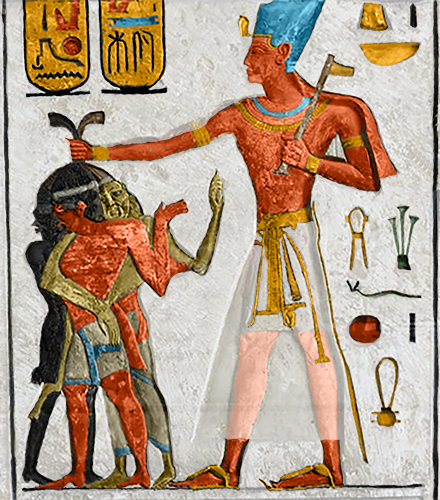
  • Ramesses the Great Smiting Enemies with Battle Axe

    Ramesses the Great Smiting Enemies with Battle Axe

    New merchandise at our Wtjasat Har Goods store featuring great Pharaoh Ramesses II. Check it out!

    [urlpreviewbox url=”http://www.cafepress.com/ancientegyptgoods/14937950″/]

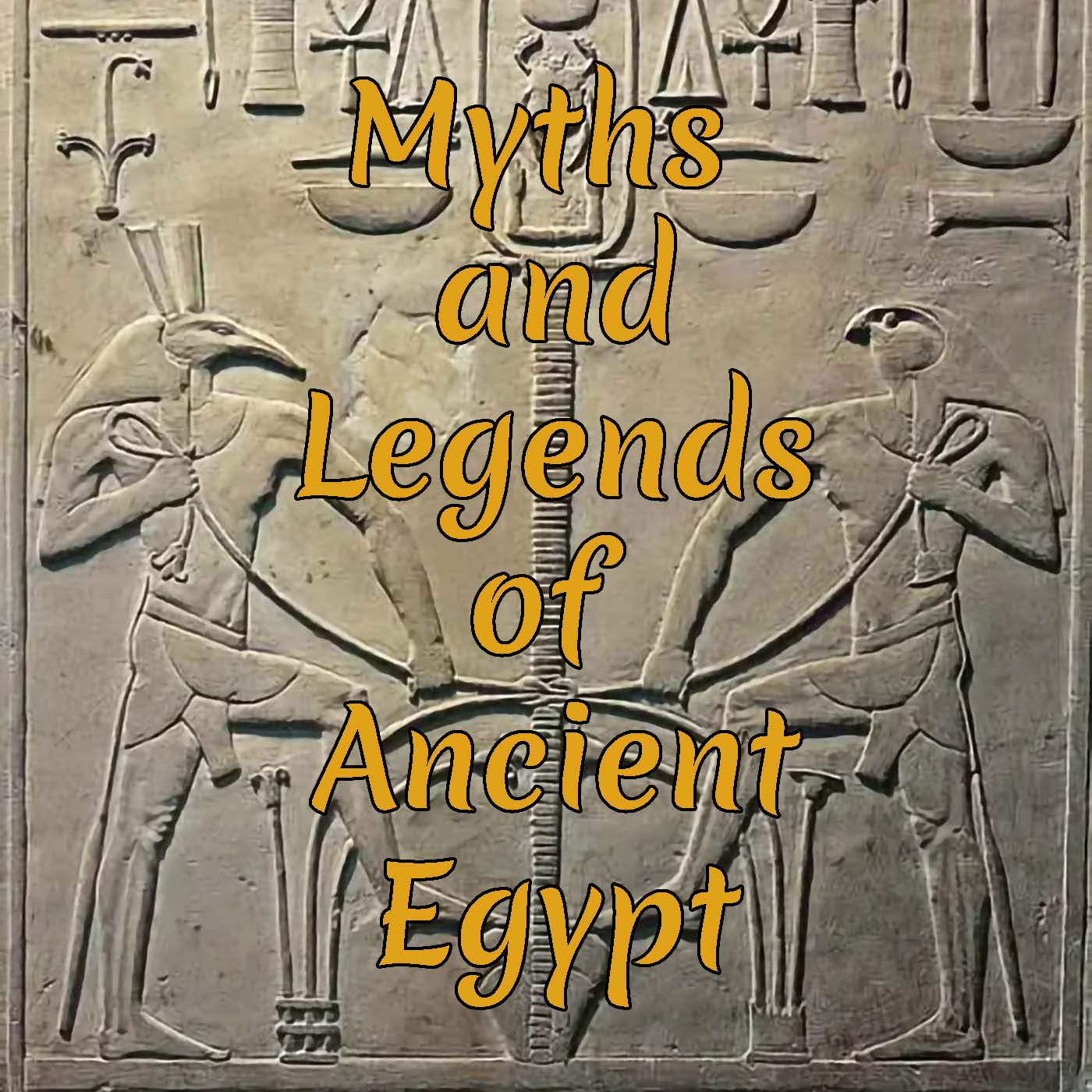
  • Myths and Legends of Ancient Egypt – Judgment of Horus and Seth

    Myths and Legends of Ancient Egypt – Judgment of Horus and Seth

    The Judgment of Horus and Seth, also known as the Contendings of Horus and Seth, is an ancient Egyptian myth that recounts the story of the gods’ struggle for the throne of Egypt following the death of Osiris. The conflict between Horus, Osiris’ son, and Seth, Osiris’ brother, lasted for decades and involved numerous trials and contests to determine who was the rightful ruler.

    Key Events

    • After Seth murdered Osiris, Horus claimed the throne as his birthright, but Seth argued that he was stronger and more capable of ruling.
    • The gods of the Ennead, led by Ra, acted as judges in the dispute.
    • Horus and Seth engaged in various competitions, including boat races, wrestling matches, and magical duels.
    • At one point, Seth attempted to humiliate Horus by assaulting him, but Horus’ mother, Isis, intervened.
    • The gods debated for years, with some supporting Seth and others favoring Horus.
    • Eventually, Osiris himself intervened from the afterlife, demanding justice for his son.
    • The gods finally ruled in favor of Horus, declaring him the rightful king of Egypt.

    This myth was significant in Egyptian culture because it reinforced the idea of divine kingship, legitimizing the rule of pharaohs as descendants of Horus. It also symbolized the eternal struggle between order (Ma’at) and chaos, with Horus representing stability and Seth embodying disorder.

    Ta'wy Podcast Channel
    Ta’wy Podcast Channel
    Myths and Legends of Ancient Egypt – Judgment of Horus and Seth
    Loading
    /
  • Gods of Ancient Egypt: Shu

    Gods of Ancient Egypt: Shu

    Shu was a significant deity in ancient Egyptian mythology, revered as the god of air, light, and peace. He was one of the primordial gods and a member of the Ennead of Heliopolis, a group of nine deities central to Egyptian creation myths.

    Origins and Role

    Shu was created by itmw, the sun god, either by spitting or through self-generation. He was the twin brother and consort of tfnt, the goddess of moisture. Together, they gave birth to Geb (the earth god) and Nut (the sky goddess), making Shu the grandfather of Osiris, Isis, Set, and Nephthys.

    Symbolism and Depictions

    Shu was often depicted as a man wearing an ostrich feather, which symbolized lightness and emptiness. He was also shown holding up the sky, separating Nut from Geb to create space for life to exist. This act was crucial in Egyptian cosmology, as it established the duality of above and below, light and dark, order and chaos.

    Associations and Myths

    • Shu was associated with wind, air, and fog, which were sometimes referred to as his “bones.”
    • He was seen as a calming force, representing balance and truth (Ma’at).
    • In later myths, Shu was linked to Atlas, the Greek Titan who held up the heavens.

    Shu played a vital role in maintaining cosmic order, ensuring that the sky remained separate from the earth. His presence was believed to bring peace and stability, making him a revered figure in Egyptian religion.

    Ta'wy Podcast Channel
    Ta’wy Podcast Channel
    Gods of Ancient Egypt: Shu
    Loading
    /
  • Myths and Legends of Ancient Egypt – The Destruction of Mankind

    Myths and Legends of Ancient Egypt – The Destruction of Mankind

    The Destruction of Mankind is a dramatic myth from ancient Egyptian mythology, found in the Book of the Heavenly Cow. It tells the story of how the sun god Ra sought to punish humanity for their rebellion against him.

    According to the myth, Ra, growing old and weary, overheard humans plotting against him. Enraged, he summoned the other gods for counsel, and they advised him to unleash his Eye, which took the form of the fierce goddess Hathor (who later transformed into Sekhmet) to carry out the destruction. Sekhmet became a bloodthirsty force, slaughtering humans mercilessly.

    However, Ra soon regretted the devastation and sought to stop Sekhmet. To do so, he tricked her by flooding the land with red-dyed beer, making it resemble blood. Sekhmet, thinking it was blood, drank it and became intoxicated, losing her desire for destruction. Thus, humanity was spared, but the myth explains the introduction of suffering and death into the world.

    This tale reflects themes of divine justice, punishment, and mercy, showing the balance between destruction and salvation in Egyptian belief systems. It also highlights the power of Ra and the dual nature of Hathor/Sekhmet as both a nurturing and destructive force.

    Ta'wy Podcast Channel
    Ta’wy Podcast Channel
    Myths and Legends of Ancient Egypt – The Destruction of Mankind
    Loading
    /